Cold Plunge.
Cold plunge units, larger and more permanent than tub-style ice baths. Designed to live outside, hold a fixed temperature year round, and accommodate a full adult lying flat or sitting upright with full immersion to the shoulders.
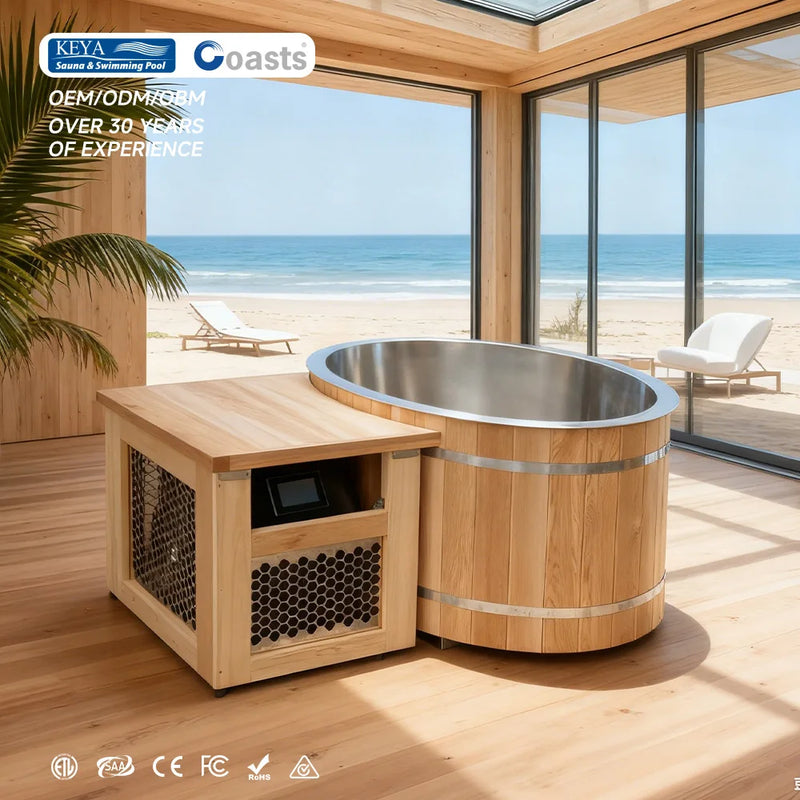
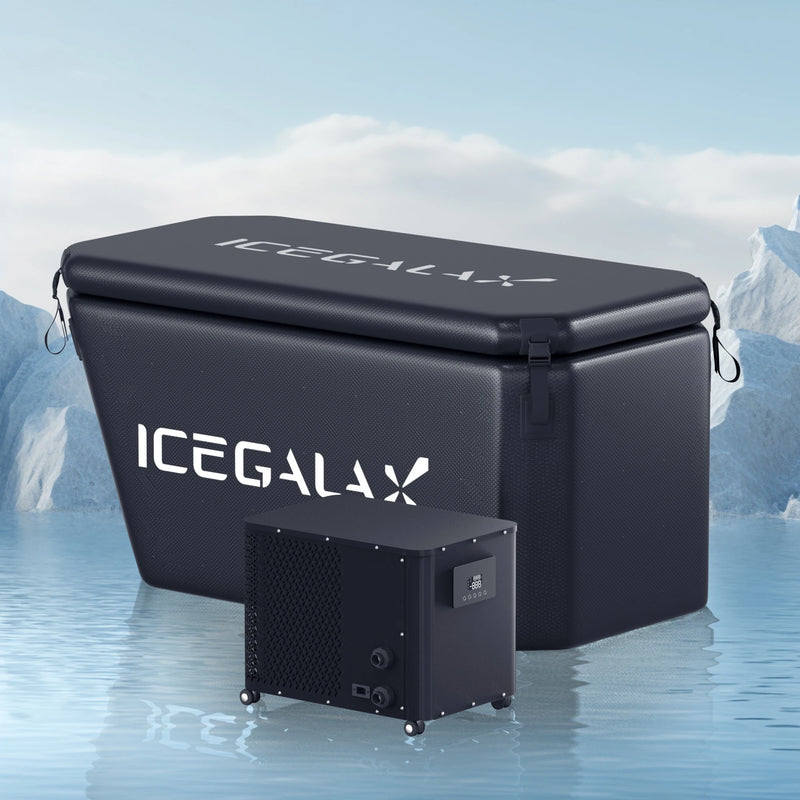
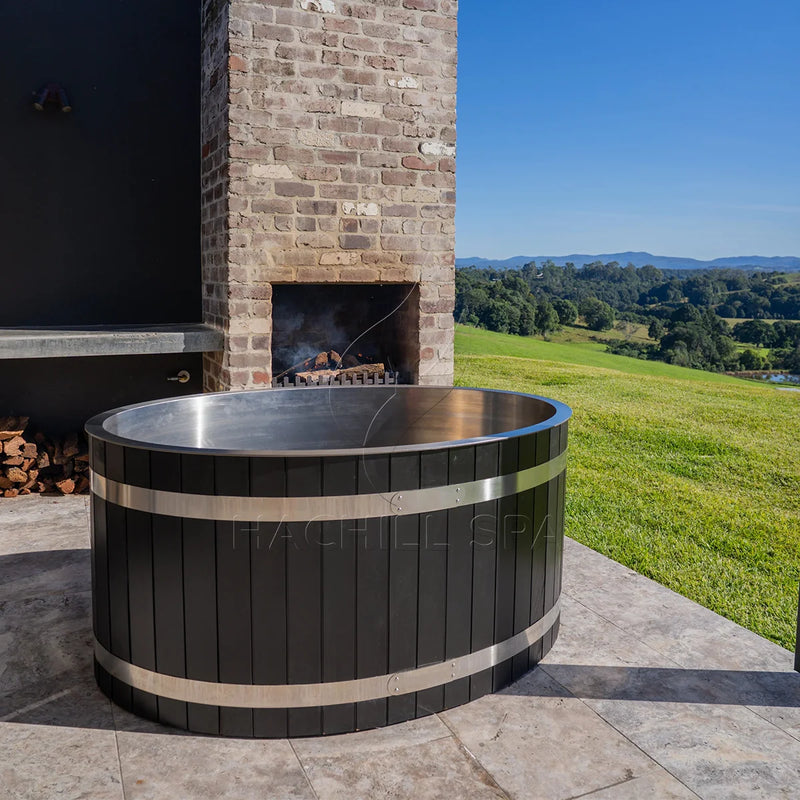
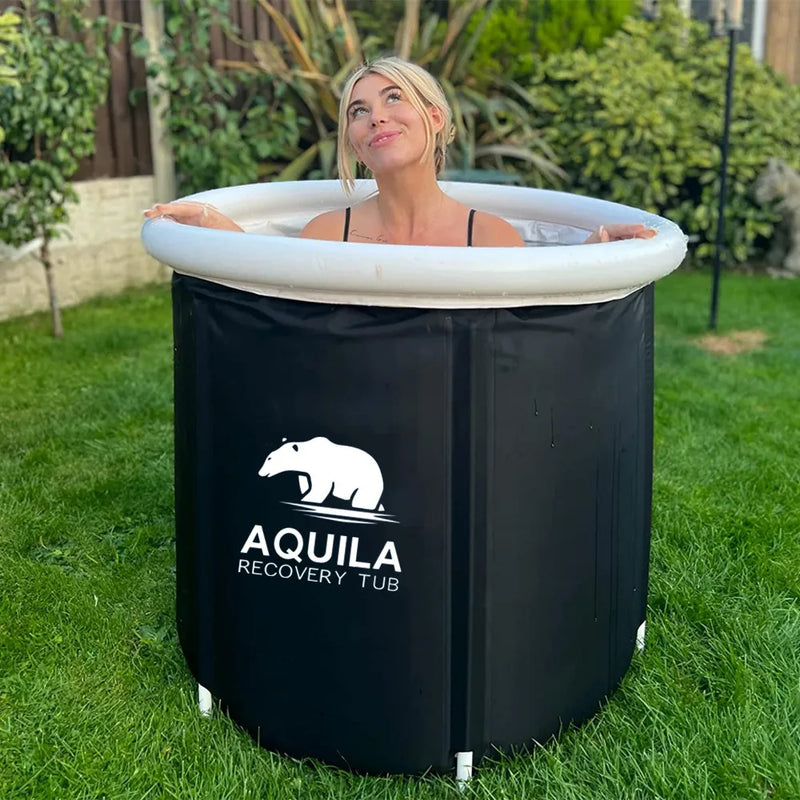
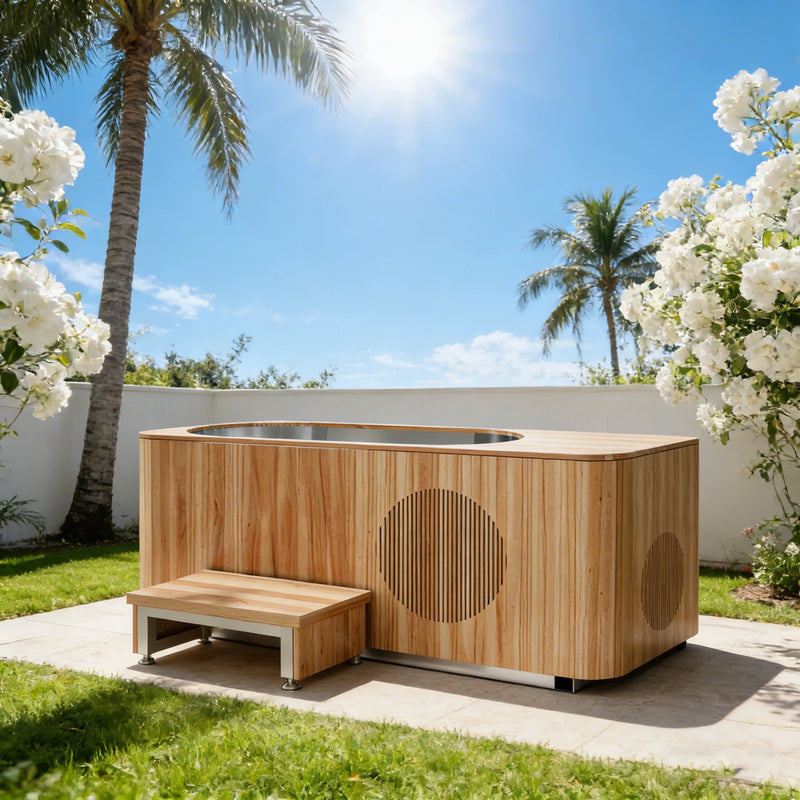
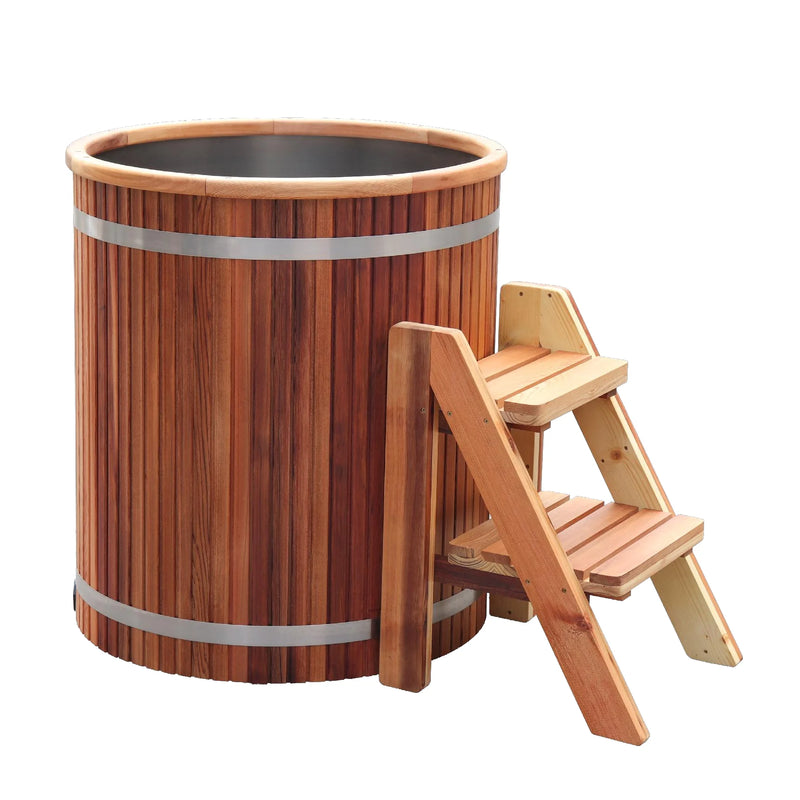
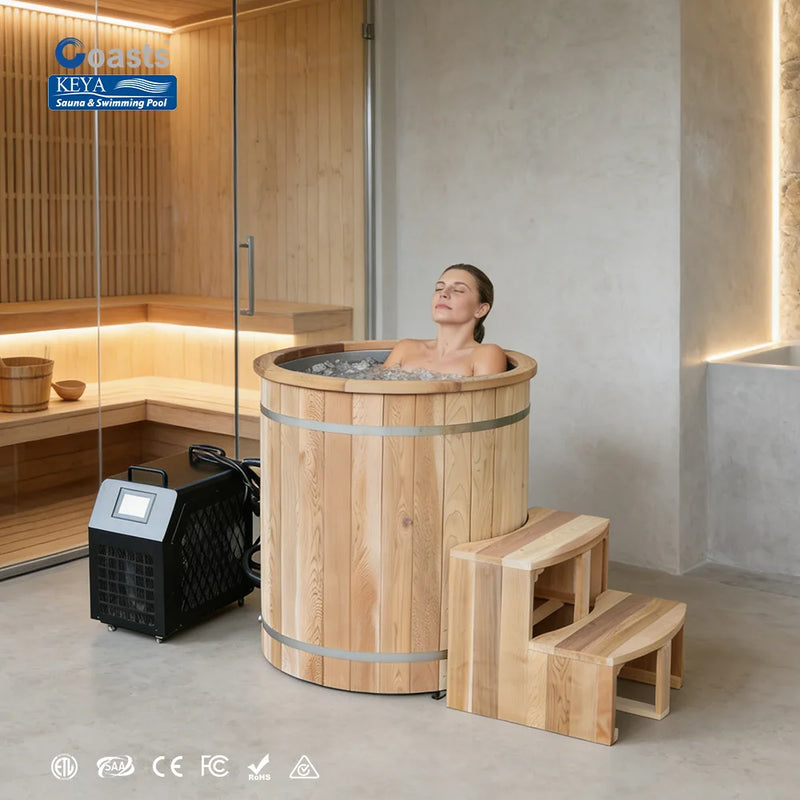
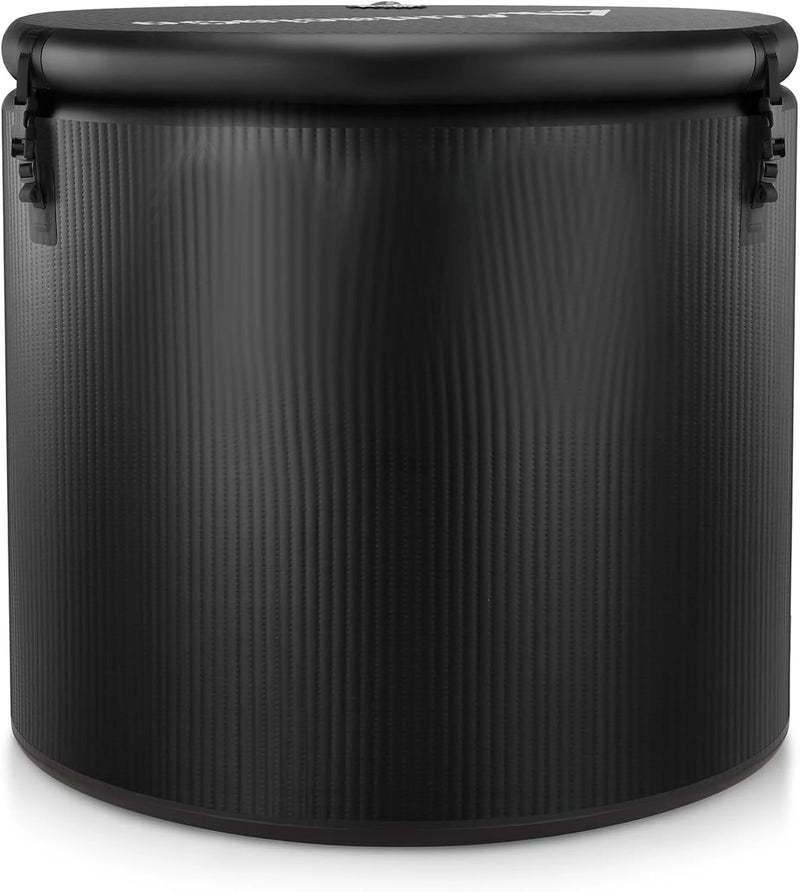
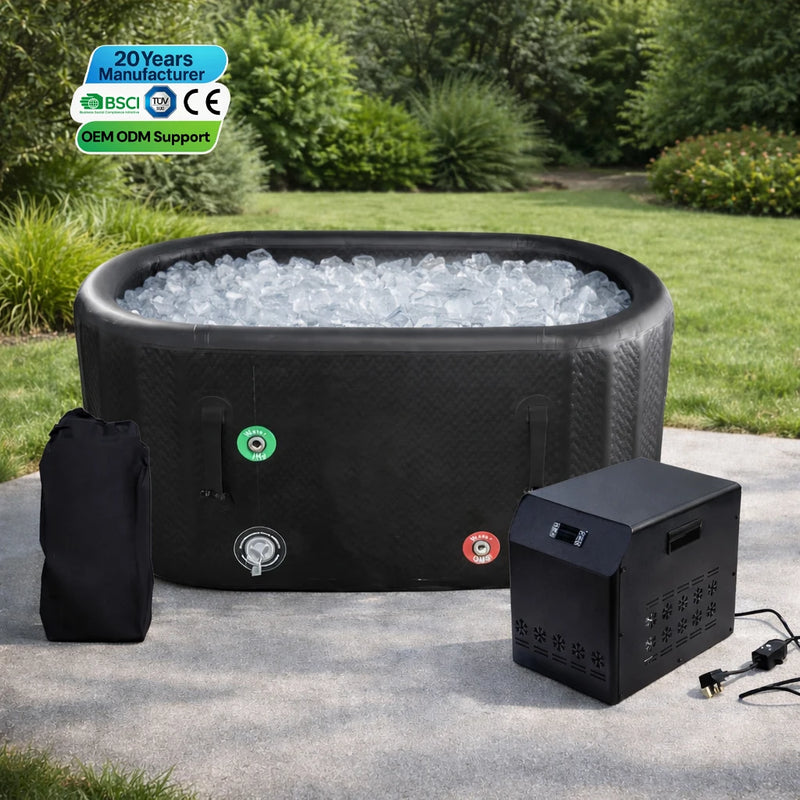
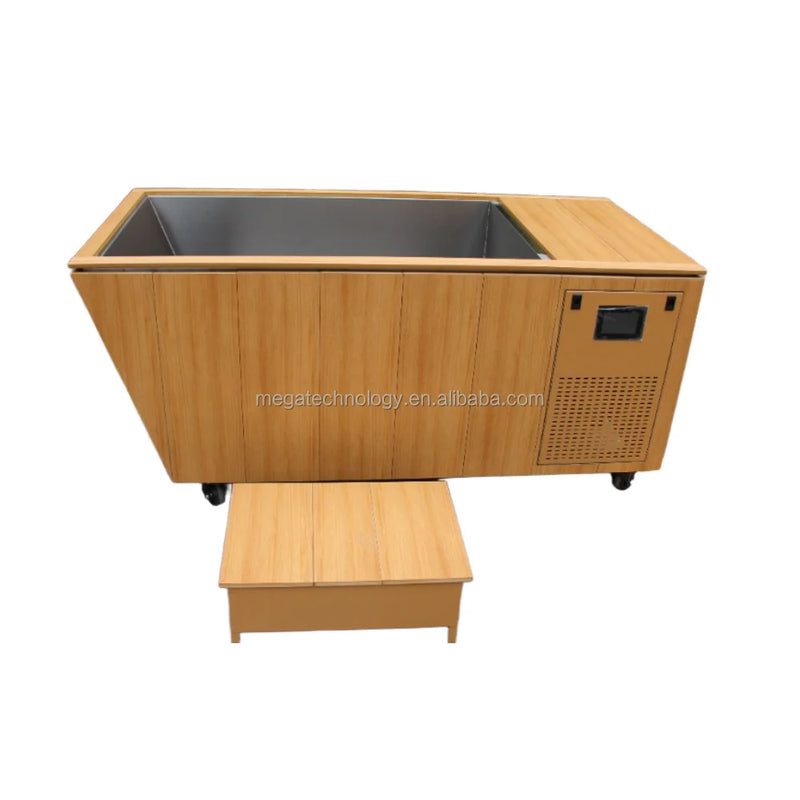
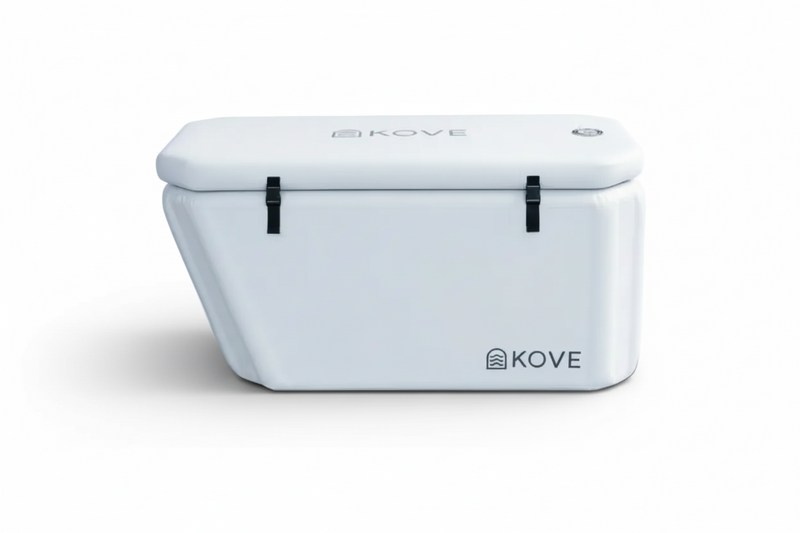
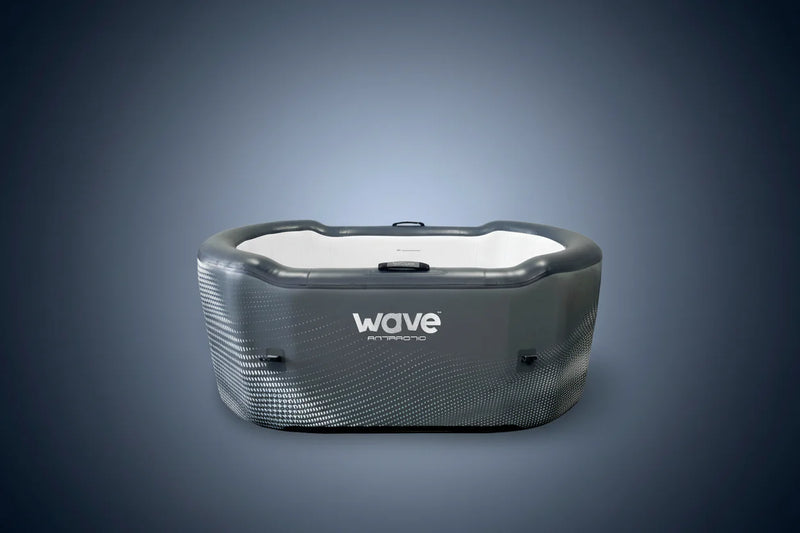
Cold plunge, when an ice bath is not enough.
The line between an ice bath and a cold plunge is fuzzy, but in practice a cold plunge is the larger, deeper, more permanent format. Where an ice bath is typically 70-90 cm deep and accommodates a seated adult, a cold plunge is 100-140 cm deep, often longer in plan, and gives the option to lie back fully submerged with arms at the sides. The format suits households who want the full athletic-recovery experience and have the garden space and water budget to support it.
Cold plunge pools almost always run with a chiller, typically 1/3 hp to 1/2 hp depending on volume. The water capacity is two to three times that of a domestic ice bath, around 600-1,000 litres, which gives more thermal mass, a more stable temperature through a session, and a less abrupt cool-down between back-to-back uses. The trade-off is the upfront cost and the longer time to bring water to working temperature from a cold fill.
UK installation considerations: a level concrete pad sized 30 cm wider than the pool footprint on each side, an outdoor-rated 16A socket near the chiller, and mains water within hose reach for filling. Drainage to a soakaway or storm drain matters more here than for smaller tubs because of the volumes involved. Most cold plunge pools sit at the back of the garden as a destination piece, often paired with an outdoor sauna for the contrast cycle.
Asked & answered.
Common questions about cold plunge. Anything missing, call or email us.
What's the difference between a cold plunge and an ice bath?
Size and posture. An ice bath is for sitting upright with knees bent, typically 70-90 cm deep and 200-400 litres. A cold plunge is deeper and longer, allowing full submersion with arms at the sides, typically 600-1,000 litres. The water and the immersion experience are the same; the format is the difference.
How big a chiller do I need for a cold plunge?
For a 700-litre pool held at 6°C in a UK garden, a 1/3 hp chiller is sufficient. 1/2 hp gives faster recovery between sessions and is more comfortable in summer. A 1/4 hp chiller can hold the temperature once reached but will struggle with the initial cool-down from cold fill.
How long does it take to fill and chill from cold?
From mains water at around 14°C, a 1/3 hp chiller will bring 700 litres to 6°C in roughly 24 to 36 hours. A 1/2 hp chiller does the same job in 12 to 18 hours. After that, the unit holds temperature with brief cycles every hour. Most owners fill once and refresh the water every six to eight weeks.
Can I use it as a hot soak too?
Cold plunge pools are designed for cold; warming them requires a separate heater and is not what the format is built for. Households who want both should consider a separate hot tub paired with the cold plunge, the contrast cycle works better with two dedicated units than one switching back and forth.
Do I need planning permission?
For a freestanding cold plunge in a domestic garden, generally no, the unit is treated like a hot tub or large planter rather than a structure. Listed buildings, conservation areas, or any unit that requires building works (deck construction, retaining walls) may need consent. Check with your local planning authority if uncertain.