Outdoor Ice Baths.
Ice baths rated for permanent outdoor use, frost-tolerant materials, IP-rated electrical components, and sealed connections built to handle British winters and damp shoulder seasons.
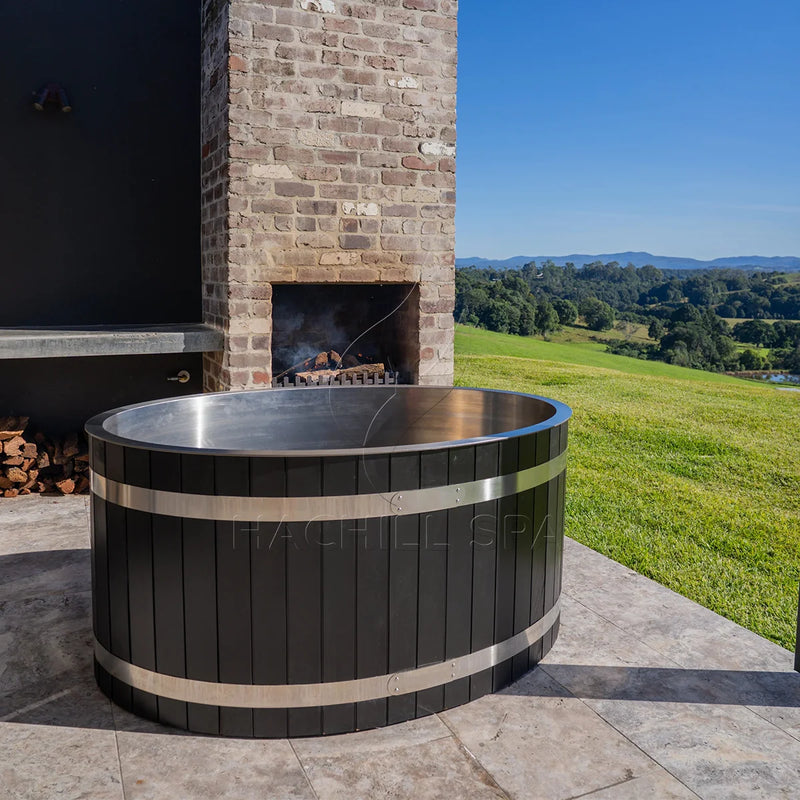
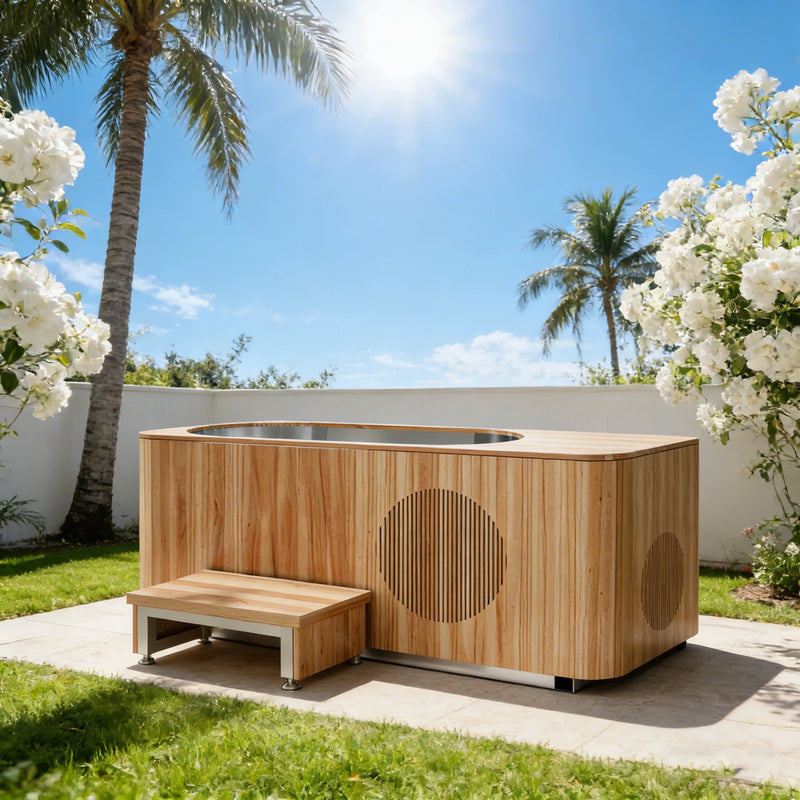
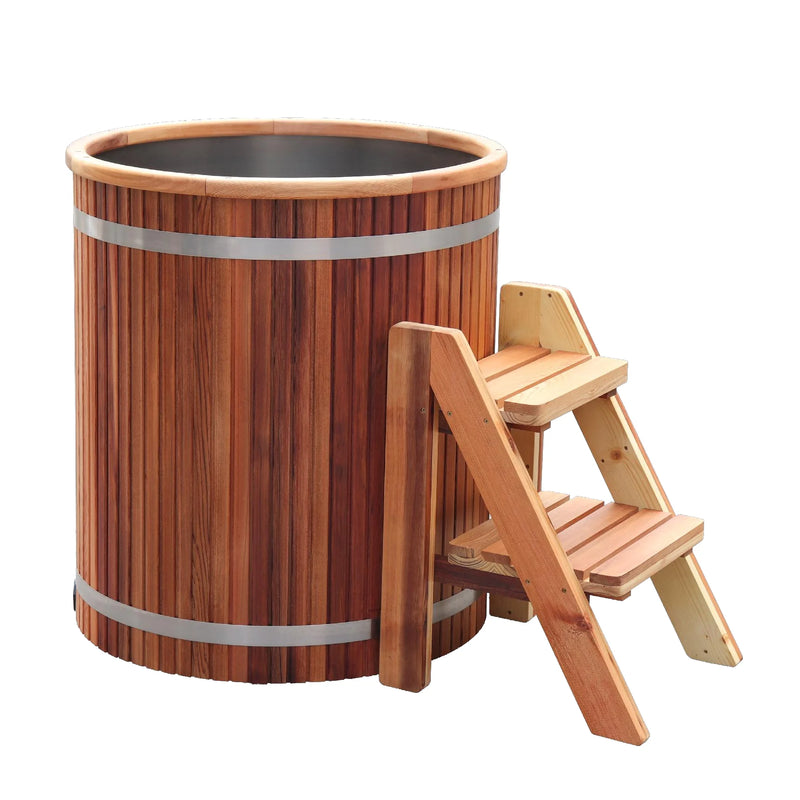
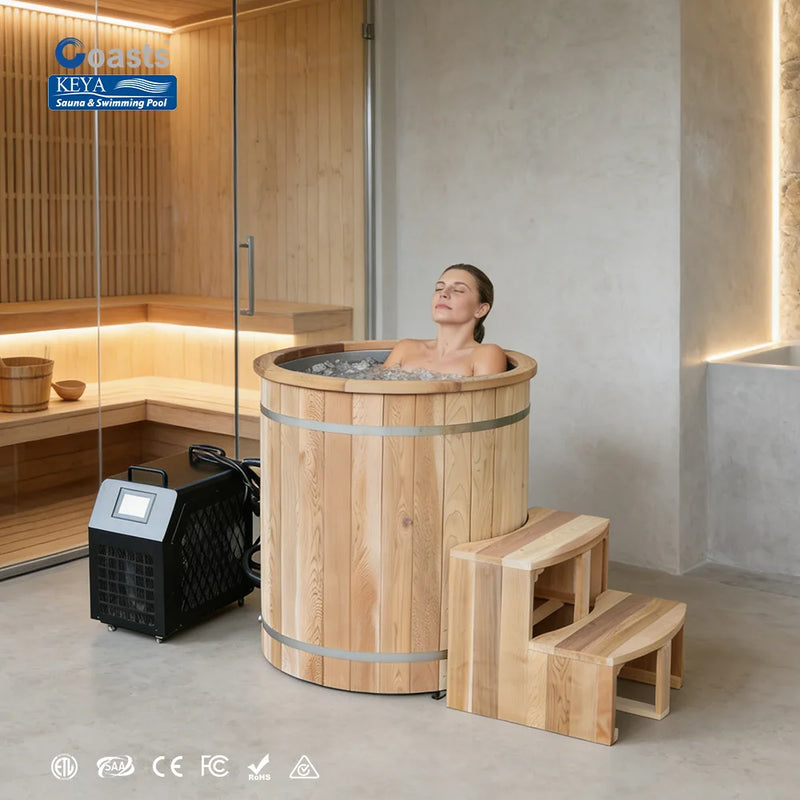
Outdoor ice baths and the British climate.
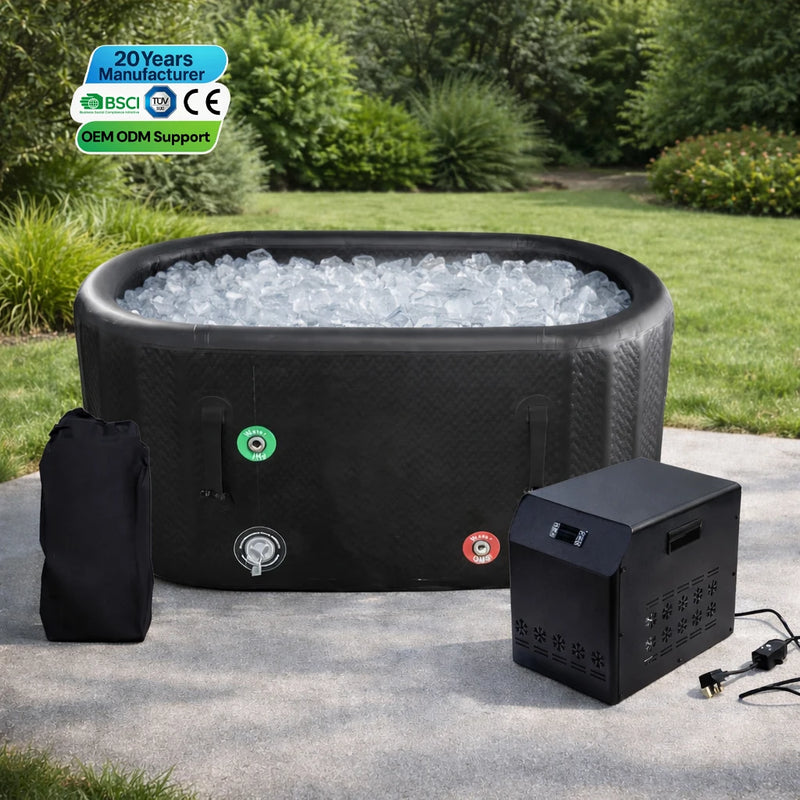
An outdoor ice bath has a different specification from an indoor one. The shell needs UV resistance and frost tolerance, electrical components need IP-rated weatherproofing, and the chiller (if present) needs ventilation that survives a wet October. Cedar and thermo-aspen handle weather well; fibreglass and polypropylene are similarly stable. The components most likely to fail outdoors are the gaskets at hose-barb fittings and the seals on the chiller's compressor housing.
Frost is the operational concern. Static water freezes at 0°C and expands by around 9% as it does, enough to crack a thin-wall liner or push a hose-barb fitting out of its threaded socket. With a chiller running, water remains in motion and the chiller's set temperature keeps it well above freezing year round. Without a chiller, the tub needs to be drained before any forecast deep freeze; insulated covers slow the process but do not prevent it.
The base matters. Outdoor tubs full of water sit at 350-550 kg over a typical 100 × 100 cm footprint. A level concrete pad or paving slabs over a hardcore base are the safe options. Soft ground or thin patio slabs over uncompacted soil will eventually settle unevenly and stress the tub. Drainage runoff away from the tub is sensible; standing water around the base accelerates rot and damages chiller housings.
Asked & answered.
Common questions about outdoor ice baths. Anything missing, call or email us.
Will an outdoor tub survive a hard winter freeze?
With a chiller running, yes, circulating water cannot freeze in the body of the tub. Without a chiller, drain the tub before any forecast deep freeze (below -5°C) to prevent the inner liner cracking. Insulated covers and side wraps reduce the risk but do not eliminate it.
Do I need a roof or shelter over the tub?
Not strictly. Outdoor tubs are rated for full exposure including rain and snow. A pergola or simple roof improves usability (getting in and out in driving rain is unpleasant) and reduces leaf-fall debris in the tub. Useful but not necessary.
How is the electrical supply handled outdoors?
An IP66-rated 13A or 16A weatherproof socket fed from the house consumer unit via SWA cable buried at 450 mm or run in armoured trunking. The socket sits within 3 m of the tub. An electrician handles this in a half-day. RCD protection is required for any outdoor electrical work.
Can I leave the chiller running through winter?
Yes, and it is recommended. Continuous operation in winter actually draws less power than summer because the ambient temperature does most of the cooling work. The compressor cycles infrequently, often only briefly to keep water moving and the chiller's heat exchanger clear of ice.
What about leaves and debris in the tub?
An insulated cover keeps debris out between sessions. A small pond skimmer net handles anything that does land in the water during a session. Filter cartridges catch the rest. Most tubs paired with a chiller need a quick visual check every other day rather than constant attention.