Wooden Ice Baths.
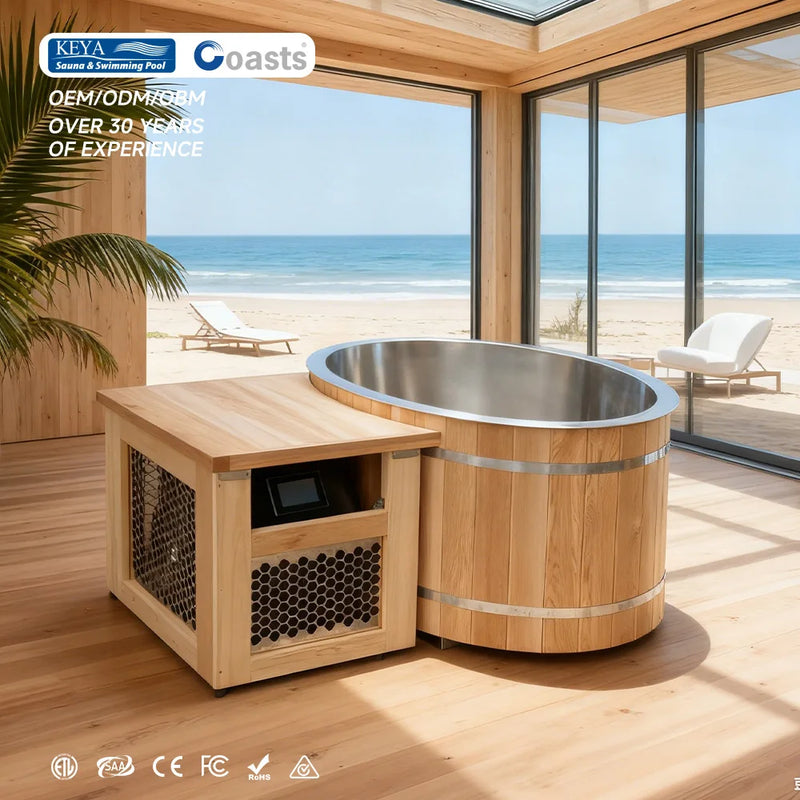
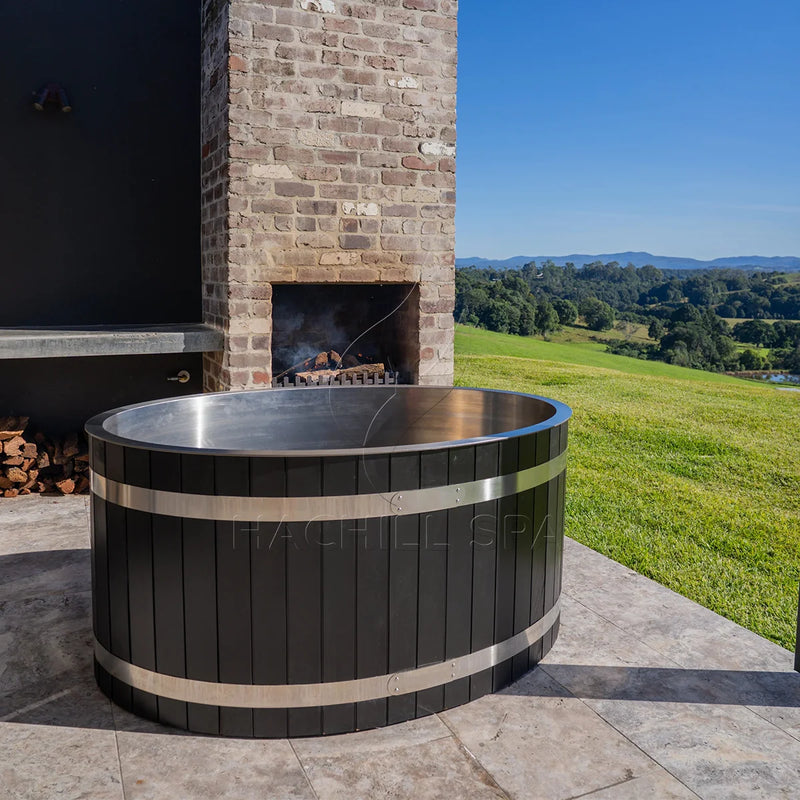
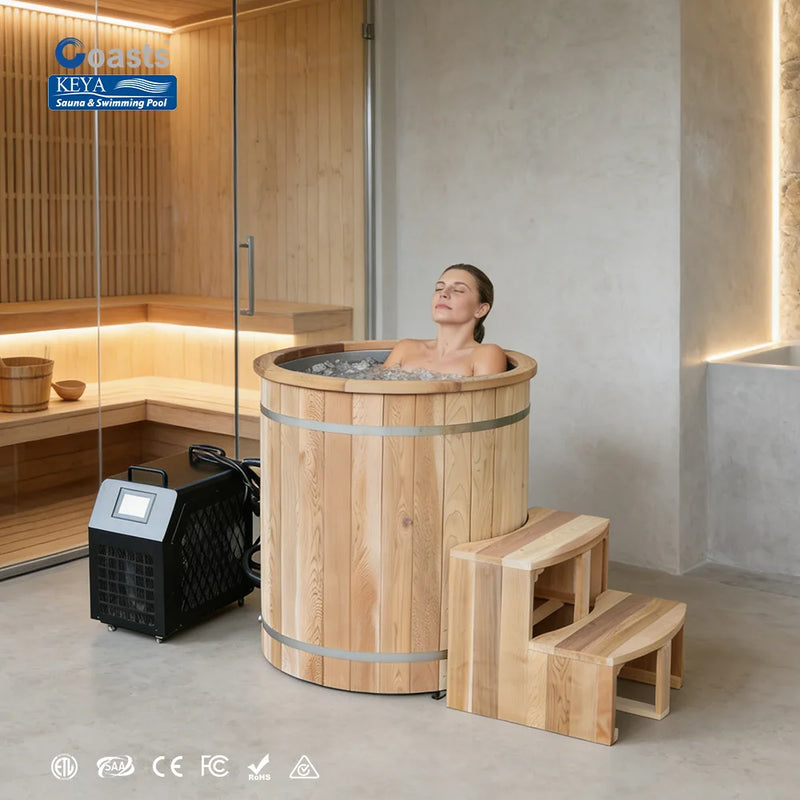
Wooden ice baths in cedar, larch, or thermo-aspen. Permanent installations with the architectural character of a hot tub but engineered for cold-water immersion year round.
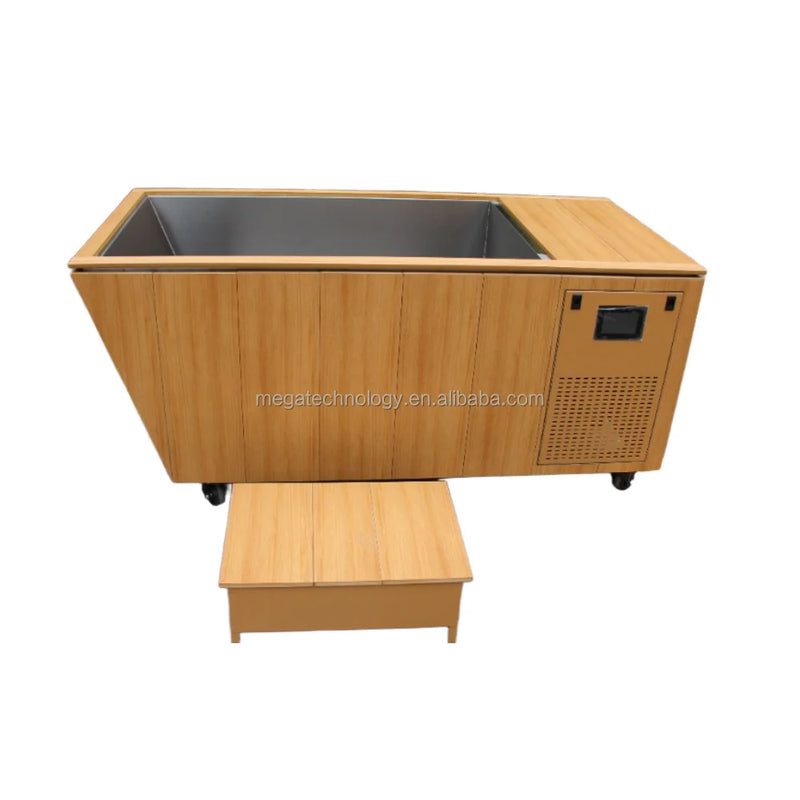
Wooden ice baths, material, build, lifespan.
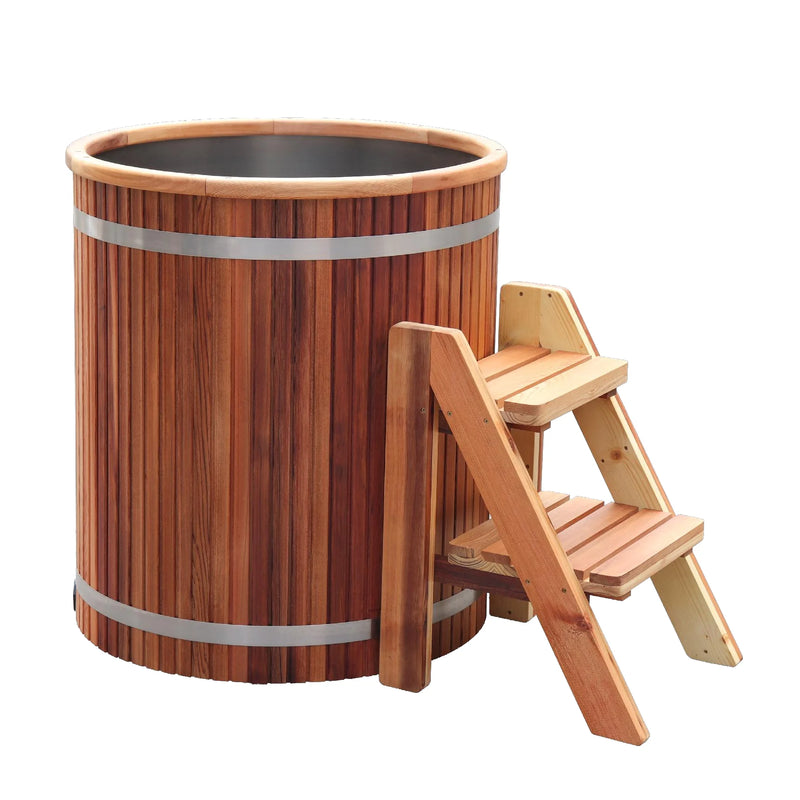
A wooden ice bath sits at the higher end of the cold-immersion category for two reasons: the materials are more expensive than fibreglass, and the build is more involved. Most quality wooden tubs use a stainless steel or food-grade polypropylene inner liner with the wood as a structural and decorative outer shell. The wood itself does not contact the water, it stays dry and stable across the seasons.
Western red cedar is the default choice. It resists rot, weighs about half what oak weighs, and ages to a soft silver-grey over five to seven years outdoors. Larch is denser, more golden in tone, and slightly more durable in damp conditions. Thermo-aspen (aspen heat-treated to remove sugars and stabilise the grain) is the longest-lasting outdoor option but pricier and harder to source. Each wood gives a slightly different aesthetic; mechanically all three perform well.
The lifespan of a properly built wooden tub is fifteen to twenty years for the wood, longer for the inner liner. The components most likely to need replacement first are the steel banding hoops (around year ten) and any rubber gaskets at the chiller connections (around year five). With annual maintenance (a coat of UV-resistant exterior oil in autumn, a hoop tightening check in spring) these tubs become heritage pieces of garden furniture rather than appliances.
Asked & answered.
Common questions about wooden ice baths. Anything missing, call or email us.
Does the wood actually touch the water?
In our range, no. The wood is a structural and decorative outer shell; the water sits inside a stainless steel or food-grade polypropylene inner liner. This separation means the wood stays dry, the water stays clean, and the tub lasts considerably longer than traditional wood-only constructions.
Cedar, larch or thermo-aspen?
Cedar is the lightest and most aromatic, the default for most installations. Larch is denser and slightly more durable in wet UK conditions; the warmer golden colour appeals to some. Thermo-aspen is pale, knot-free, and the longest-lasting outdoor option, at a premium. All three are sensible; choose primarily by appearance.
How heavy is a wooden tub?
Around 80-120 kg empty for a single-person tub, depending on size and wood. Full of water, the assembly weighs 380-550 kg. Two adults can move an empty tub on a flat path; once installed and filled, it stays put. Plan delivery access carefully, most tubs are too wide for a standard 76 cm doorway and need to be carried through patio doors or a side gate.
What maintenance does the wood need?
An annual coat of UV-resistant exterior oil in autumn (forty minutes' work) keeps the wood weatherproof and either preserves the original colour or ages it gracefully, depending on the oil chosen. Steel hoop checks every spring confirm the bands are still snug. Beyond that, the tub is largely self-maintaining.
Will it crack in a hard freeze?
The wood will not crack. The risk is the inner liner: if water is left static and freezes solid, expansion can stress steel or polypropylene seams. A chiller circulating water continuously, or draining the tub before any forecast hard freeze below -5°C, prevents the issue.