Ice Bath At Home.
Ice baths sized for indoor or sheltered home use, quieter chillers, compact footprints, and tubs designed to fit through standard internal doors and live in utility rooms or basements.
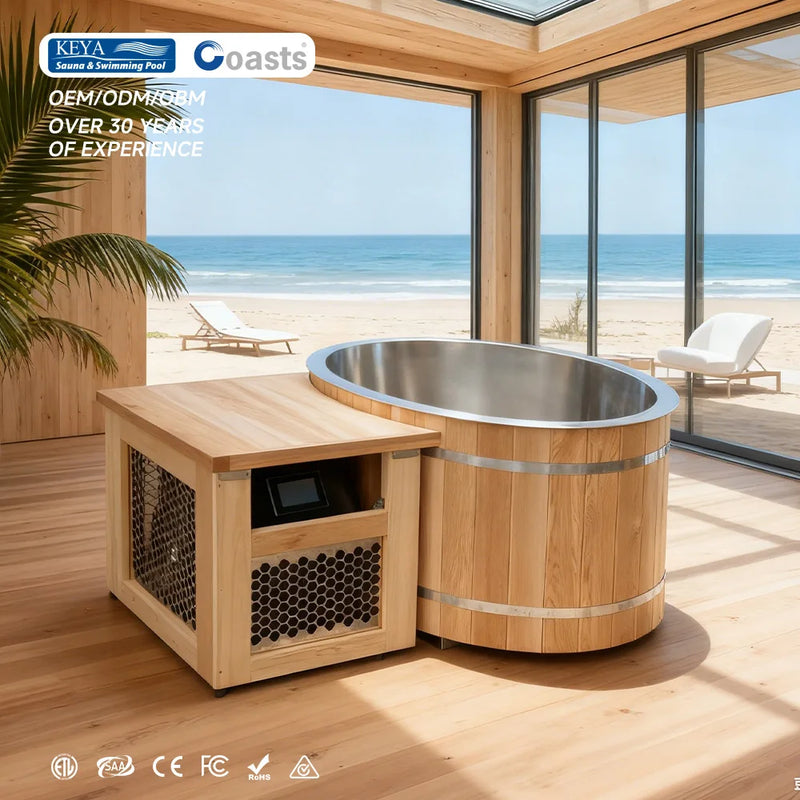
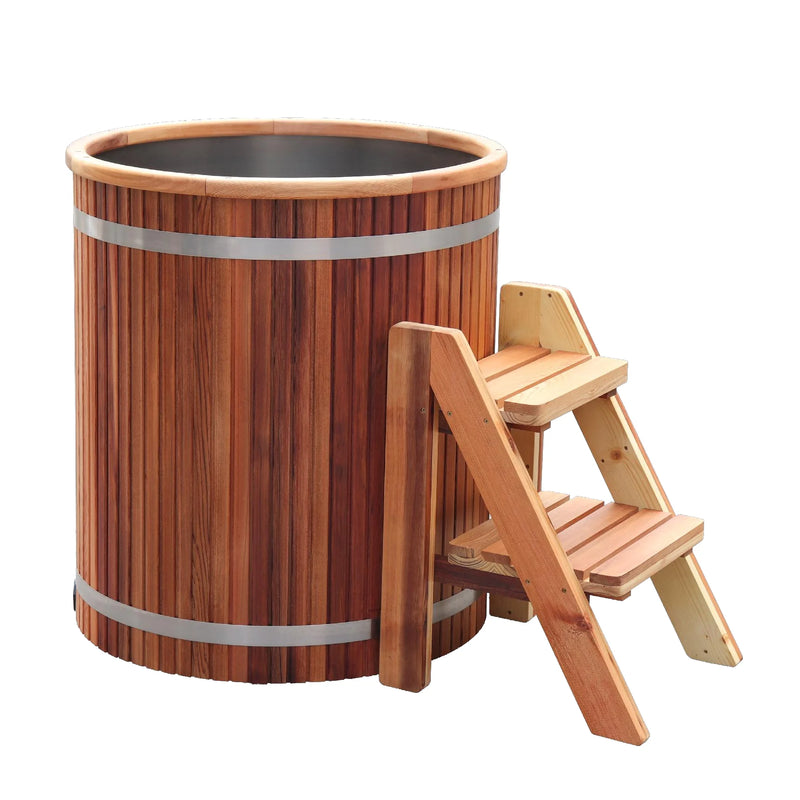
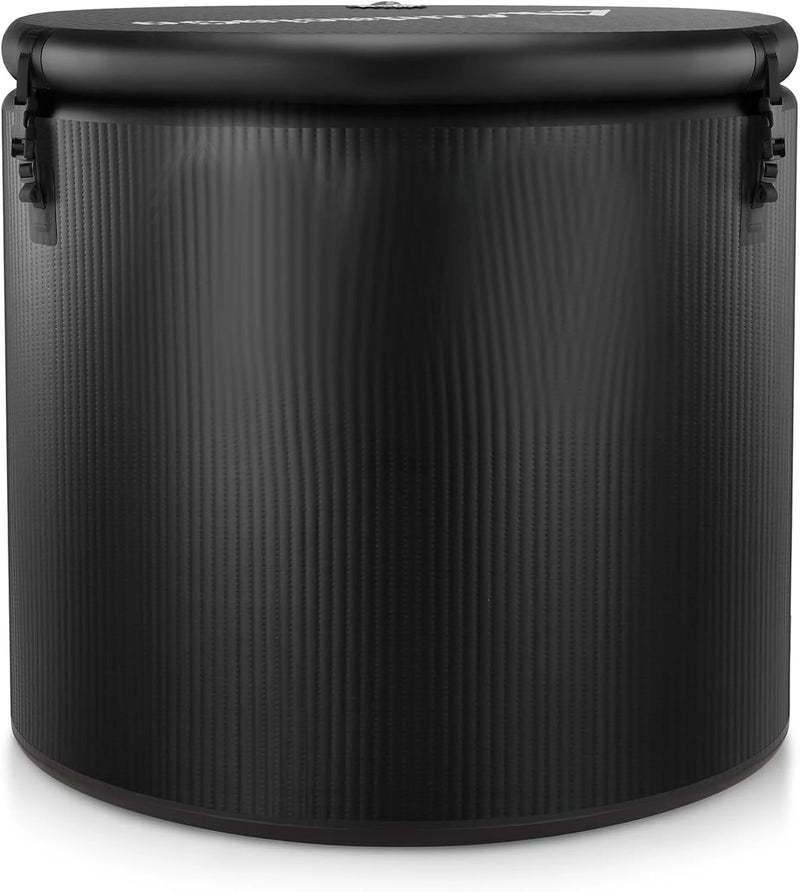
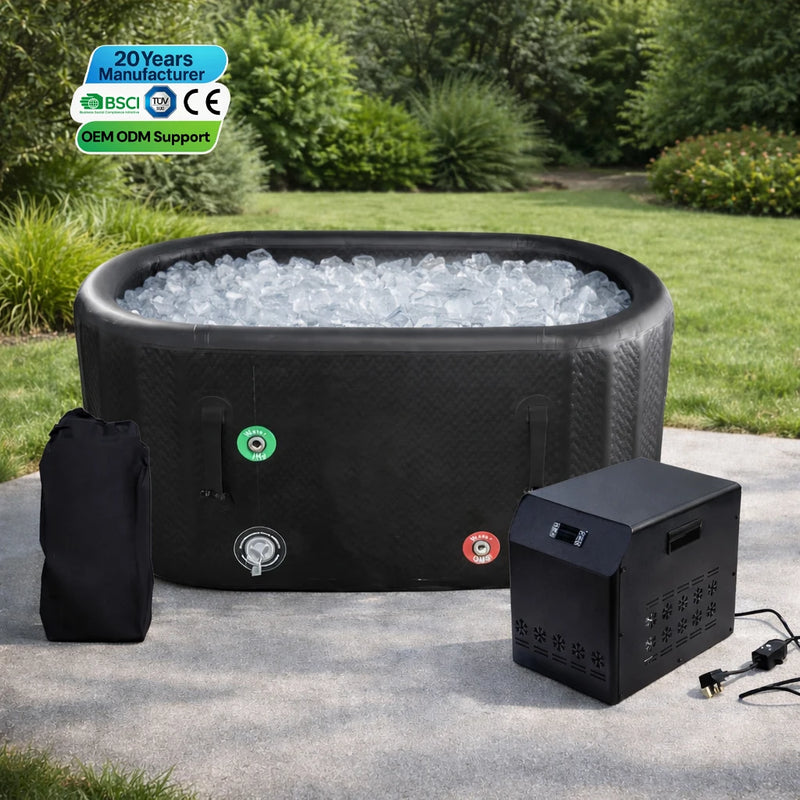
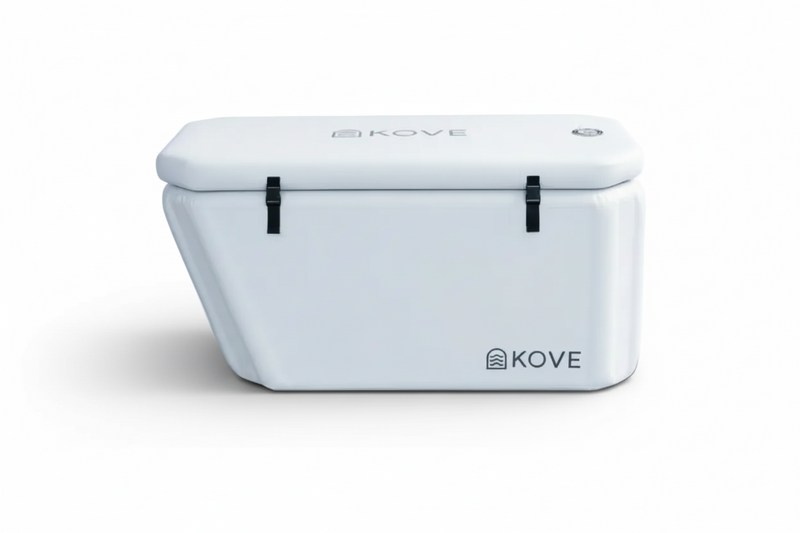
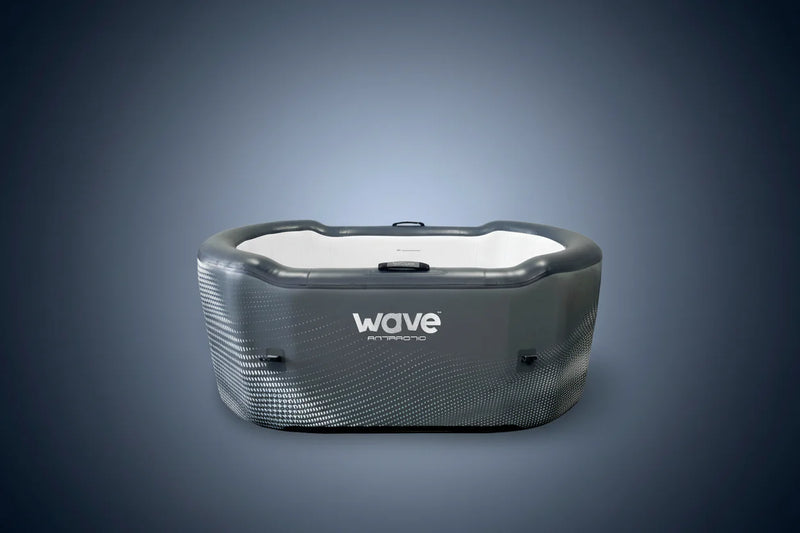
Home ice baths, set up indoors.
An at-home ice bath is one designed to live indoors, typically in a utility room, garage, basement, or shed adjacent to the house. The format is usually compact (under 90 cm width), uses a quieter chiller (under 50 dB at 1 m), and is paired with sanitation that does not introduce strong odours. The case for indoor over outdoor is convenience: short walk to the tub from a warm room, no weather considerations, and faster recovery into a hot shower afterwards.
The constraints are different. Indoor tubs need a level floor that can support 350-500 kg, mains water within hose reach, drainage for emptying (a sink or shower drain works), and adequate ventilation for the chiller. The chiller exhausts warm air during operation, so a sealed room will rise in temperature; a utility with a window or vent grille is ideal. Most owners find that the chiller's running cost falls indoors during winter because ambient air is warmer and the compressor cycles less.
Practical layout: tub against a wall with 60 cm clearance for entry and exit, chiller positioned within 1 m of the tub via short hoses, drainage hose run to the nearest waste outlet. The whole installation typically fits in a 2 × 1.5 m floor area. Annual maintenance is minimal, descale the chiller's heat exchanger every two years if you live in a hard-water area, replace filter cartridges every six months, and wipe the tub down weekly.
Asked & answered.
Common questions about ice bath at home. Anything missing, call or email us.
Will an indoor tub create humidity in my house?
Less than you would expect. Cold water has very low evaporation rate compared to hot water, so a covered indoor tub adds minimal humidity to the room. The few minutes of session use add a small amount of moisture, comparable to a kettle boiling. A utility room with a vent fan handles it easily.
Can I install one in a basement?
Yes, provided the floor is concrete or slab, drainage is accessible, and the chiller has somewhere to exhaust warm air. Older basements without ventilation will see ambient temperature rise during chiller operation; a small extractor fan vented outside resolves it.
How do I empty an indoor tub?
The drain hose runs to a nearest outlet, typically a shower drain, utility sink, or floor gully. Most tubs include a 5 m hose; longer runs need a small submersible pump because gravity drainage slows over distance. A full 300-litre tub drains in twenty to thirty minutes.
Will the chiller noise carry through walls?
Quiet domestic chillers (under 50 dB at 1 m) are noticeable in the room they sit in but rarely audible through a closed internal wall. Bedrooms above a chiller-equipped utility may pick up some low-frequency hum during compressor cycles; check listings for measured dB figures before ordering.
How does the cost compare to an outdoor setup?
Indoor units are typically a similar upfront cost but lower running cost in winter (warmer ambient air means less compressor work) and slightly higher in summer (the chiller exhausts heat into the room, raising baseline temperature). Net annual energy is comparable to an outdoor setup.