Wood Fired Saunas.
Wood-fired outdoor saunas, traditional sauna heat from a stove burning seasoned hardwood. No electricity, real löyly steam from water on hot stones, and the slow ritual of fire-tending before each session.
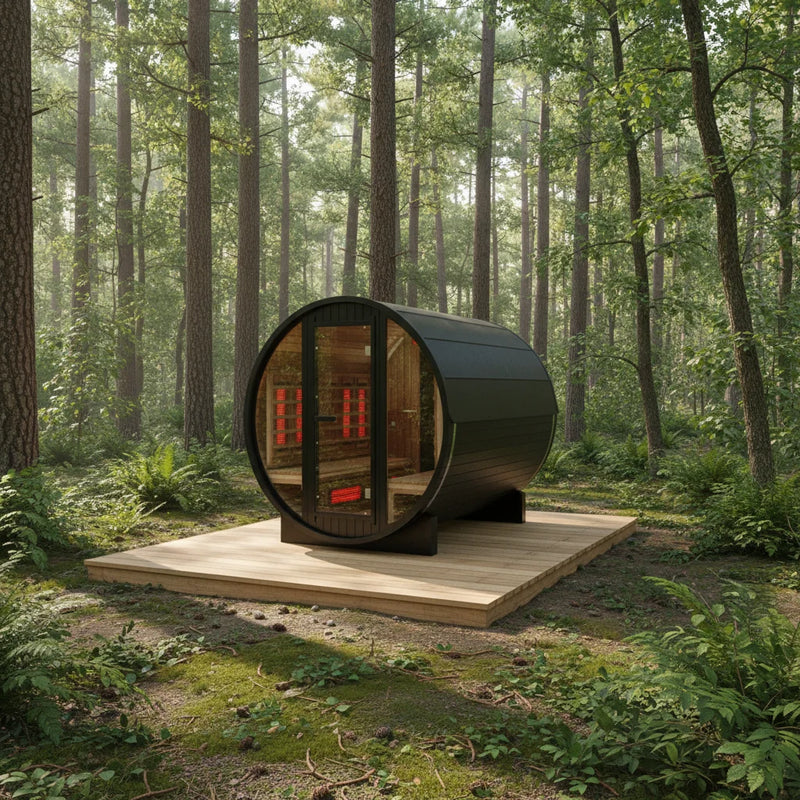
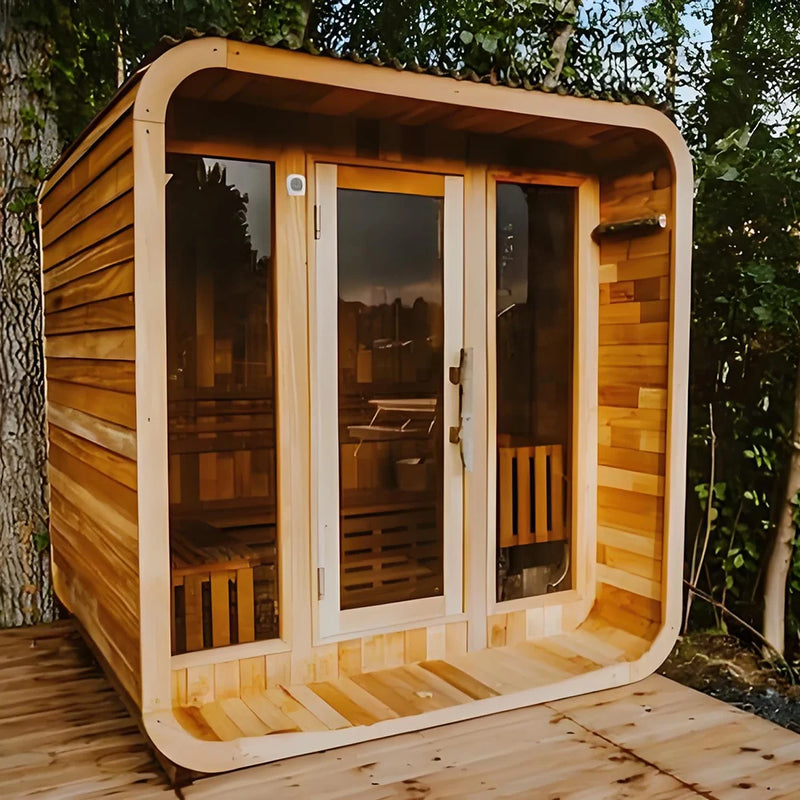
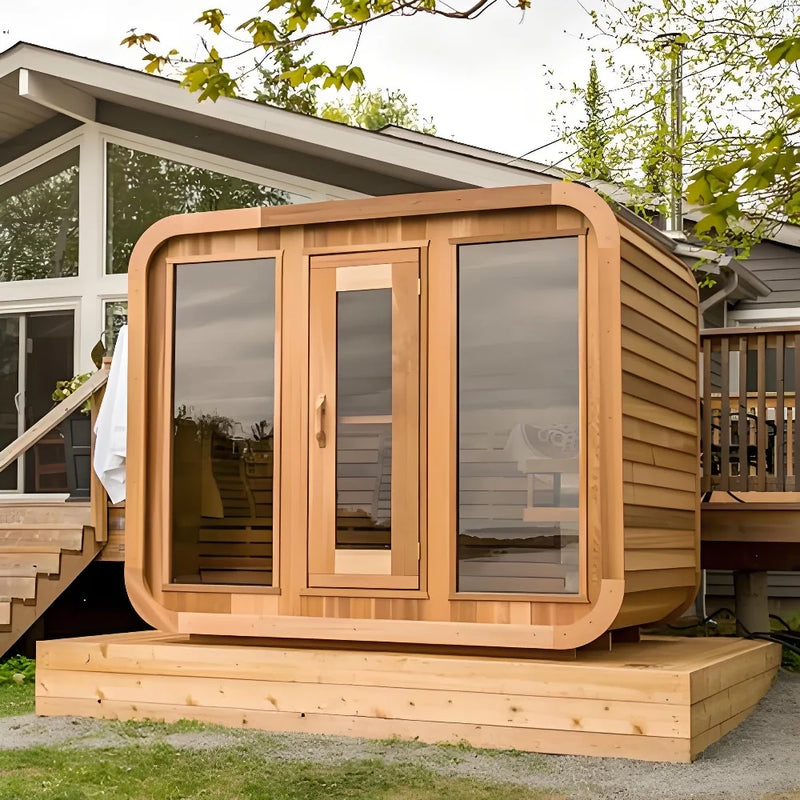
Wood-fired saunas, the slow ritual.
A wood-fired sauna is a different proposition from any electric format. The heat comes from a steel or cast-iron stove burning seasoned hardwood, the temperature climbs slower (forty-five to sixty minutes from cold), and the experience is bound up in the practical act of laying a fire, lighting it, and waiting. For many owners, this is the appeal, the sauna becomes a deliberate act rather than a switch flick, and the ritual changes the session itself.
The stove sits inside the cabin with a flue running up through the roof. Stones rest on top of the stove, which heat to 200°C+ during the burn; pouring water onto these stones generates the löyly steam that defines a traditional sauna experience. Fuel is seasoned hardwood (birch, ash, or oak) kiln-dried below 20% moisture for clean burning. Most stoves take 8-12 kg of wood per session, around the size of a single supermarket logs sack split between three sittings.
UK practical considerations: the flue must comply with Building Regulations Part J for solid fuel installations, with a single-skin or twin-wall stainless steel flue terminating above the cabin's roof and ideally above any adjacent ridge line. HETAS-registered installation is recommended. Fuel storage matters, keep wood dry and stacked with airflow; wet wood produces poor heat and excessive creosote. Ash management is the daily housekeeping task; a metal ash bucket lives next to the stove for safe disposal.
Asked & answered.
Common questions about wood fired saunas. Anything missing, call or email us.
How long does the fire need to be lit before a session?
Forty-five minutes to an hour from light to working sauna temperature, longer in deep winter. The stones need to absorb enough heat to produce real steam when water is poured. Most owners light the fire while preparing dinner and have a session afterwards.
What kind of wood do I need?
Seasoned hardwood (birch, ash, or oak) kiln-dried to below 20% moisture. Birch is the traditional choice in Finland for its clean burn and pleasant aroma. Avoid softwoods such as pine, which produce excessive creosote and can damage the flue over time. A standard one-cubic-metre crate of kiln-dried birch costs around £200 in the UK and lasts most households six to nine months of regular use.
Does a wood-fired sauna need planning permission?
The cabin itself usually falls under permitted development. The flue needs HETAS-compliant installation and may need building control sign-off depending on its height relative to neighbouring buildings. In smoke control areas (most major UK cities) the stove must be DEFRA-exempt; reputable manufacturers list this clearly.
How often does the flue need cleaning?
Annual sweep by a HETAS-registered chimney sweep is the standard recommendation, more often if you use the sauna heavily. A clean flue runs hotter, burns more efficiently, and substantially reduces fire risk. Sweeping cost is typically £80-120 per visit in the UK.
Is a wood-fired sauna more authentic than electric?
If authenticity matters to you, yes. The Finnish tradition is wood-fired; the steam from water on rocks heated by burning birch is the löyly experience as it has been for centuries. Electric saunas approximate this, capably and conveniently. The choice is between ritual and convenience; neither is wrong.