Full Spectrum Infrared Saunas.
Full-spectrum infrared cabins combine far-infrared carbon panels with near-infrared LED arrays, giving you the standard sauna heat plus shorter-wavelength radiation often used for photobiomodulation.
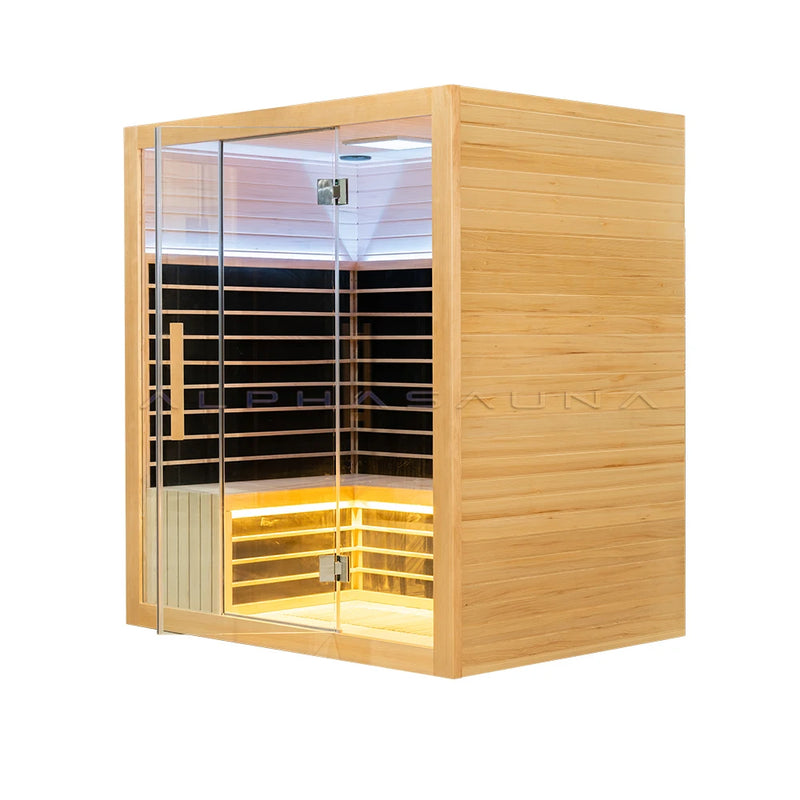
Full-spectrum infrared, in honest terms.
Full-spectrum infrared is a marketing label for cabins that combine multiple infrared wavelengths in one unit. In practice, the cabin works exactly like a far-infrared sauna at an ambient 50-65°C (the wood, the bench, the warm-up time are the same) with the addition of a near-infrared LED tower or panel that runs at shorter wavelengths (typically 660 nm and 850 nm) for photobiomodulation.
Near-infrared LEDs do not contribute meaningfully to the sauna's heat. They produce a low-temperature radiation that targets the skin and superficial tissue. The literature on photobiomodulation is genuinely promising for skin recovery and localised circulation, though far less developed than the literature on heat exposure. If you intend to use the LEDs, plan a separate ten-minute window before or after the sauna proper rather than running them throughout the session, the dose-response data favours short, focused exposure.
The practical case for full-spectrum is convenience: you get both modalities in one cabin, with one electrical supply and one footprint. The case against is upfront cost (adding the LED array is a meaningful upgrade) and complexity, since the LED system has its own controls and lifetime. For households who already run a separate red-light therapy panel, full-spectrum is a useful consolidation. For households who are unsure, far-infrared alone is the safer first purchase.
Asked & answered.
Common questions about full spectrum infrared saunas. Anything missing, call or email us.
What does full-spectrum actually mean?
A cabin that includes far-infrared carbon emitters (the standard sauna heat) plus near-infrared LEDs (typically 660 nm and 850 nm). Some manufacturers add mid-infrared elements too. The label is unregulated, so check the actual wavelengths and components rather than relying on the marketing term alone.
Are the near-infrared LEDs safe for daily use?
Reputable LED panels are well within safe exposure limits for skin and eye contact at recommended distances. Manufacturer guidance usually specifies eye protection during direct exposure and a maximum session length of ten to twenty minutes per area. Daily use within those parameters is supported by the available literature.
Should I run the LEDs during the whole sauna session?
The dose-response data on photobiomodulation favours focused ten- to twenty-minute exposures rather than full sauna-length sessions. Most owners turn the LEDs on for the first ten minutes of the warm-up, then enjoy the sauna heat without them. Running the LEDs continuously is not harmful, just unnecessary.
Do the LEDs need replacing?
LED panels are rated for around 50,000 hours of working life, roughly twenty years at typical session use. The carbon emitter panels are similar. The cabin's electronic controller is usually the first component to fail, around year ten, and is straightforward to replace.
Is full-spectrum worth the upgrade over far-infrared alone?
If you would otherwise buy a separate red-light panel, yes. If you want a sauna and nothing more, far-infrared alone is the simpler choice. The far-infrared experience is identical between the two formats, so the upgrade is purely about adding photobiomodulation.