Portable Infrared Saunas.
Portable infrared saunas with carbon emitter panels, fold-down units that deliver the same wavelength of heat as a fixed cabin, on a 13A plug, in a fraction of the floor space.
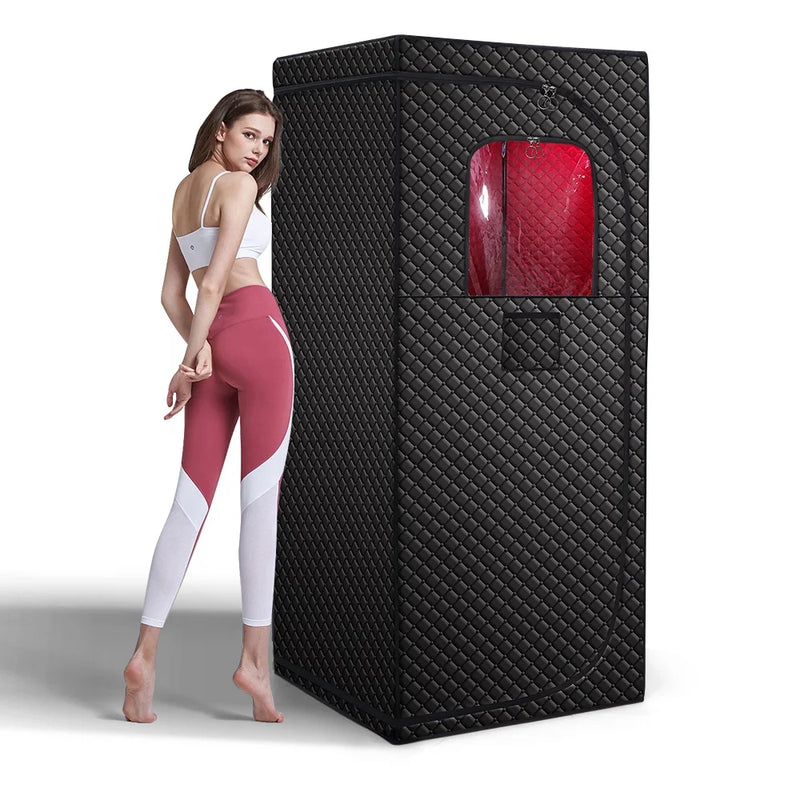
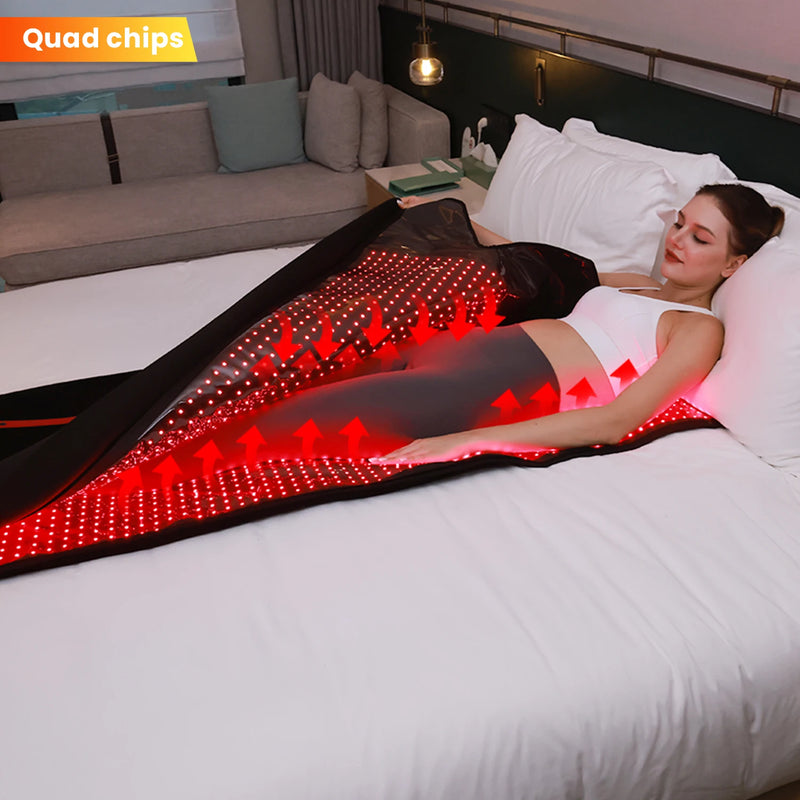
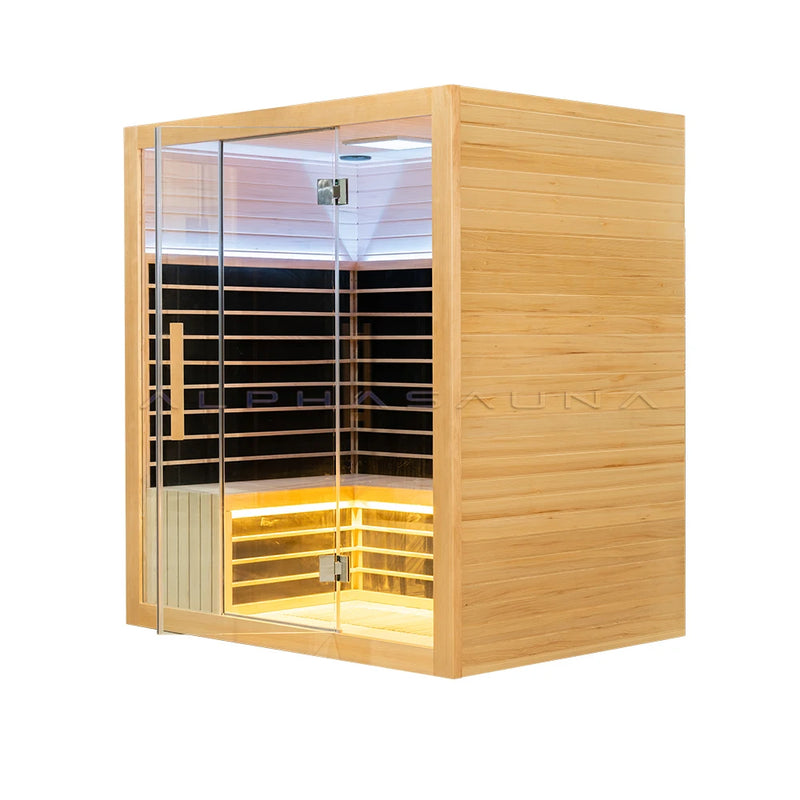
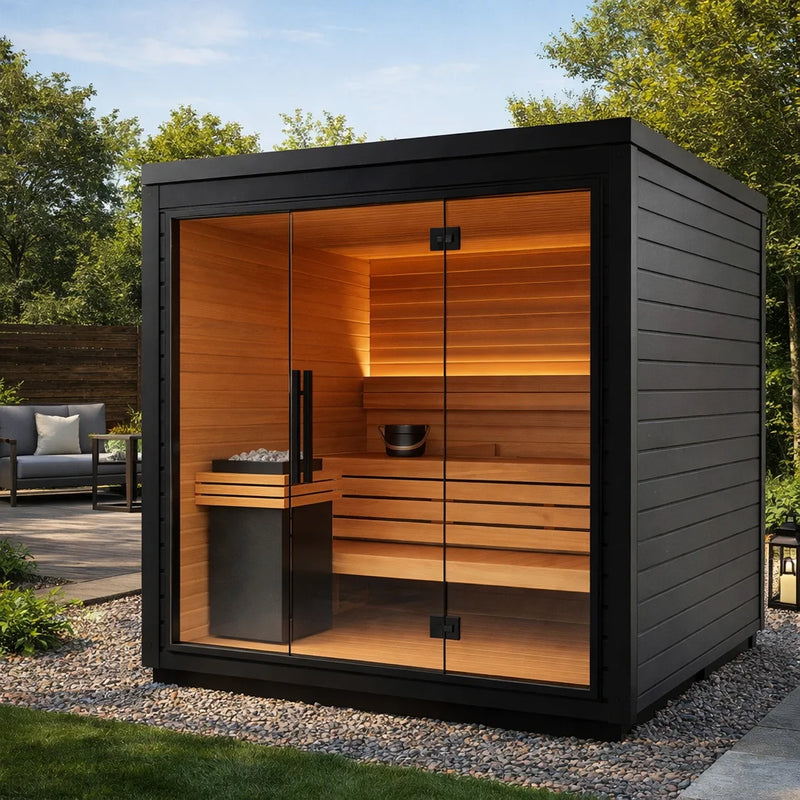
Portable infrared saunas, made simple.
A portable infrared sauna uses the same carbon emitter technology as a fixed cabin but inside a collapsible frame. The panels typically run at 1000-1500W combined, target a body-surface temperature similar to a permanent build, and cycle off and on under thermostat control. Most units offer a temperature range of around 35°C to 65°C and a session timer up to sixty minutes.
The case for a portable infrared, rather than a tent or blanket, is consistency. The carbon panels are sized and positioned similarly to a small cabin, so the heat distribution feels even rather than spotty. EMF readings on better units sit below 1 mG at the user's seat, comparable to a quality fixed cabin and well under the levels you would expect from older ceramic units. UK plug, single carton, kettle-equivalent draw.
The constraints are the same as any portable: less wood, less mass, less long-tail durability than a cedar build. But for a renter who wants the actual experience of an infrared session (sweating freely at 60°C, sitting upright, listening to nothing) a portable infrared is the closest analogue to a fixed cabin you can buy at this price point. Worth it for daily use, fair for two or three sessions a week.
Asked & answered.
Common questions about portable infrared saunas. Anything missing, call or email us.
What is the EMF level inside?
A well-built portable infrared with low-EMF carbon panels reads under 1 mG at the user's seat, comparable to a quality fixed cabin. Older or lower-grade units can read significantly higher; ask for the manufacturer's measured figure rather than a marketing claim before ordering.
Far-infrared, near-infrared, or full-spectrum?
Most portables use far-infrared carbon panels, which is the gentlest and most-studied band. A few units add near-infrared LEDs for photobiomodulation, sometimes marketed as full-spectrum. Far-infrared alone is enough for the standard sweat-and-recover use case; the additional bands are an extra rather than a requirement.
How does the heat compare to a fixed cabin?
The radiated heat from the panels themselves is comparable. The difference is the surrounding cabin: cedar holds heat in a way fabric cannot, so a fixed cabin feels more enveloping at the same air temperature. The body's sweat response is similar; the experience is less immersive.
Does it run quietly?
Yes. There is no fan and no compressor. The only sound is the thermostat clicking the panels on and off, quieter than a refrigerator. Suitable for evening or early-morning sessions in a flat with thin walls.
Will I need a dedicated socket?
No. A standard UK 13A socket on a normal ring main is enough. Avoid running another high-draw appliance such as a kettle from the same socket simultaneously, but otherwise the unit shares the circuit without issue.