Infrared Saunas.
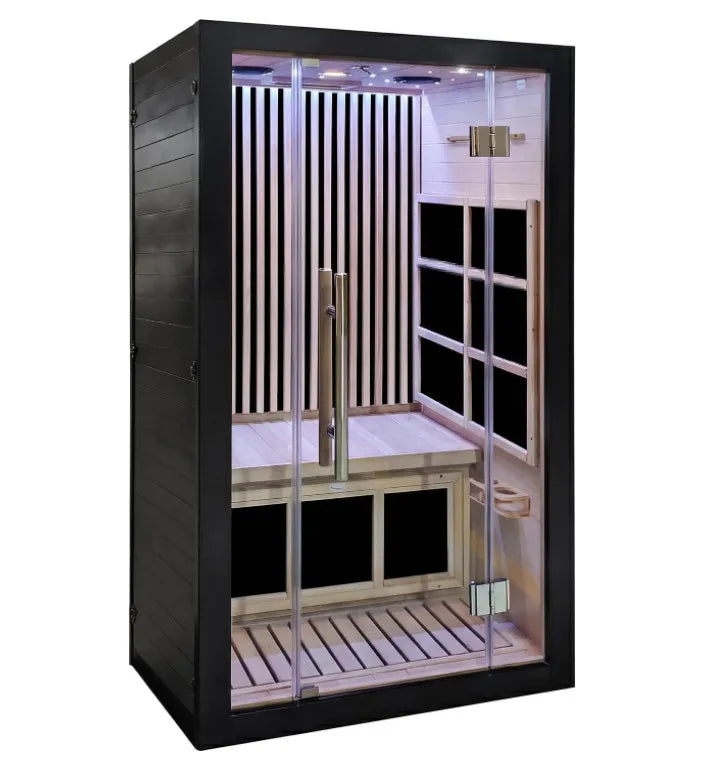
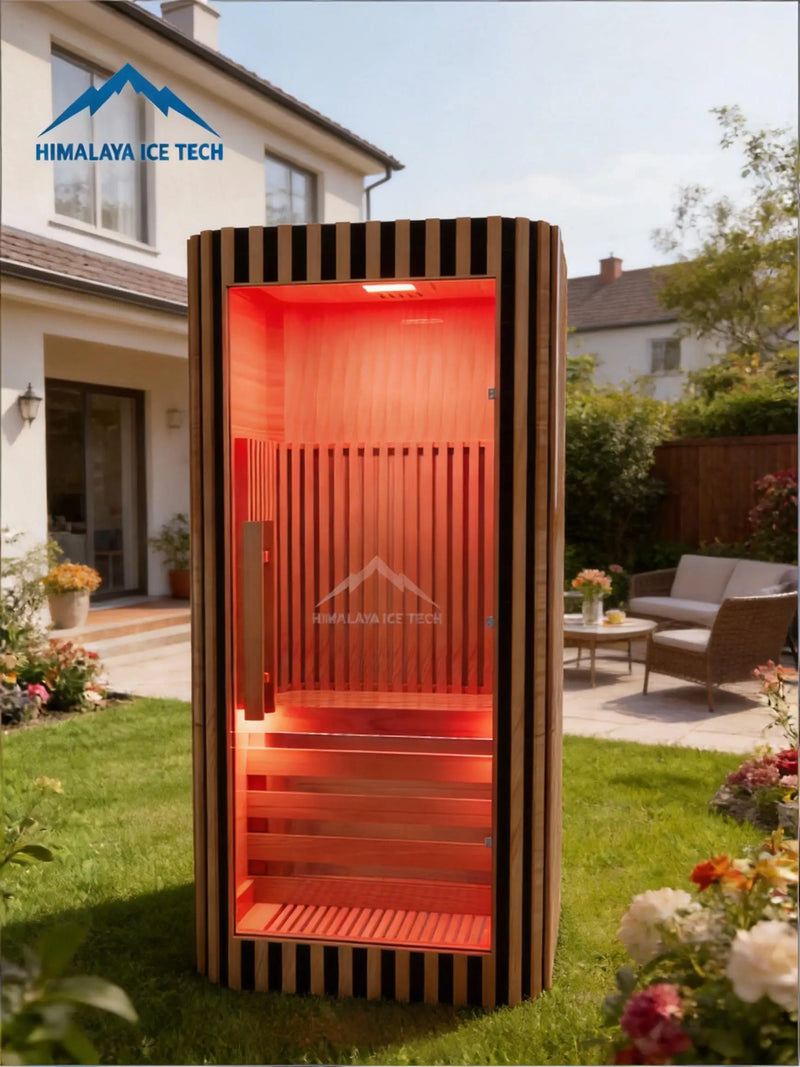
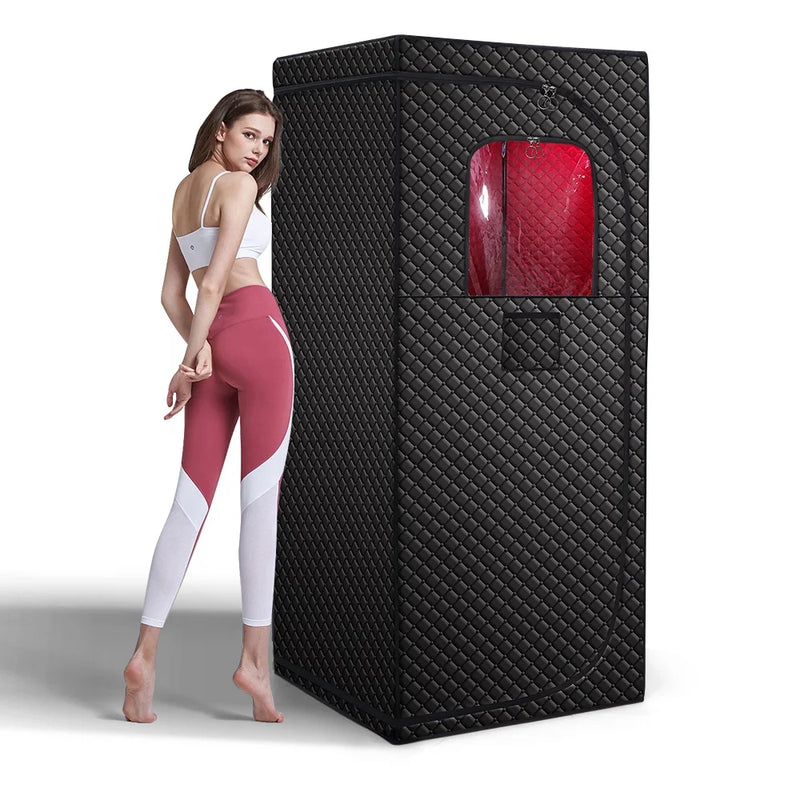
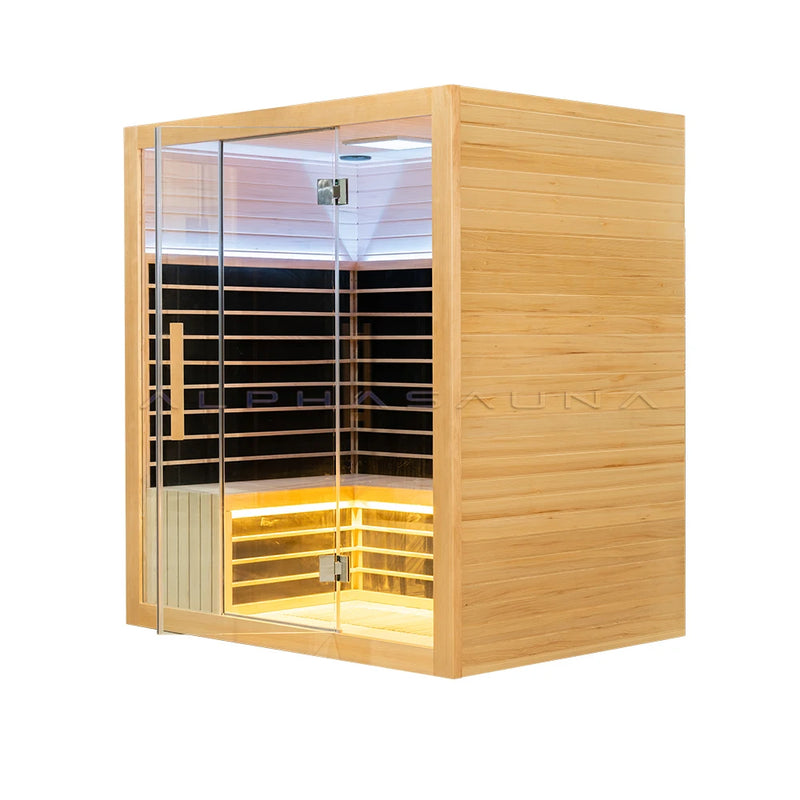
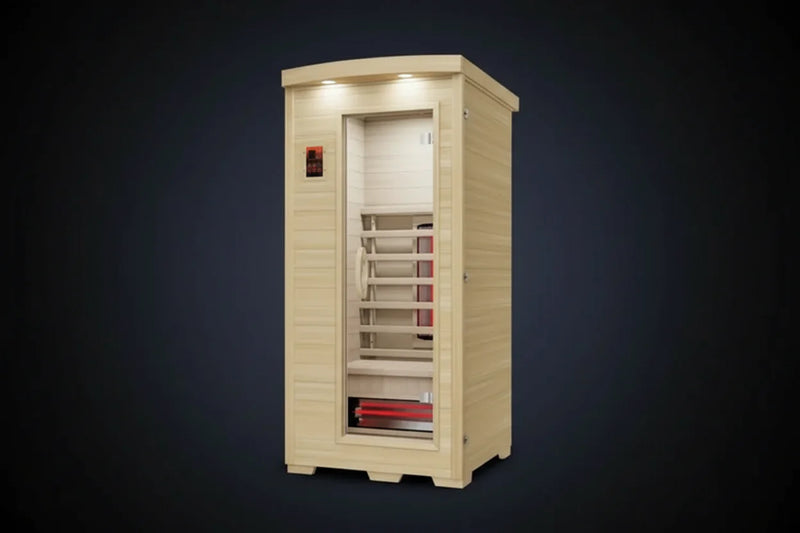
Infrared cabins for indoor rooms — single-person to four-person sizes, in cedar, hemlock and aspen. Carbon emitters, low-EMF panels, and a 13A UK plug as standard.
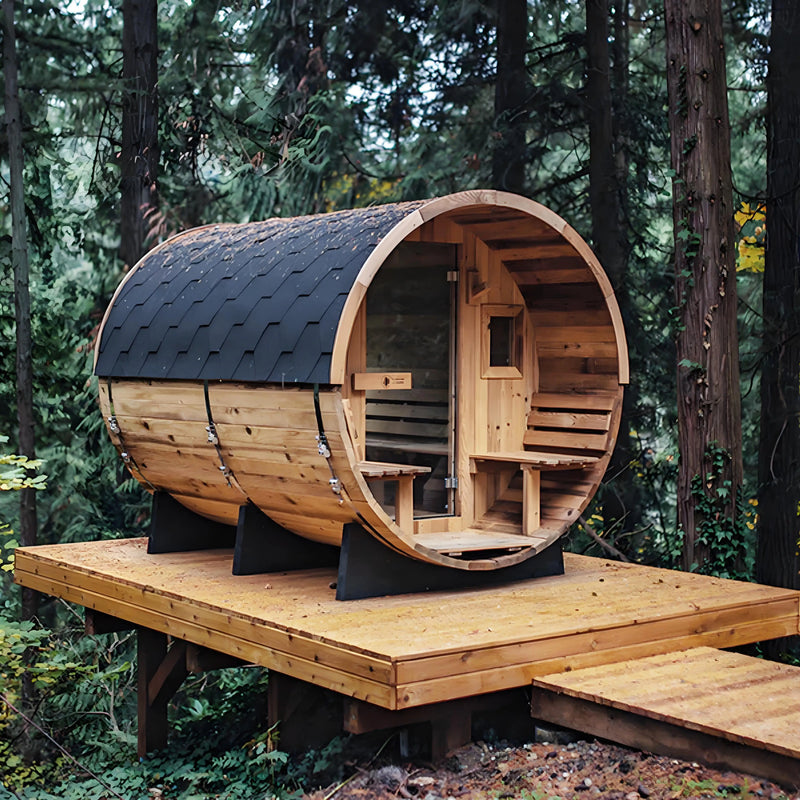
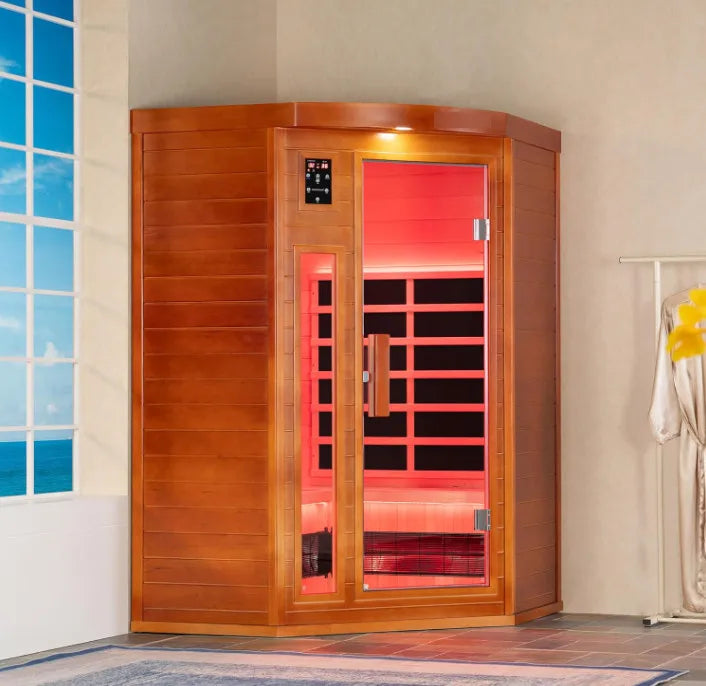
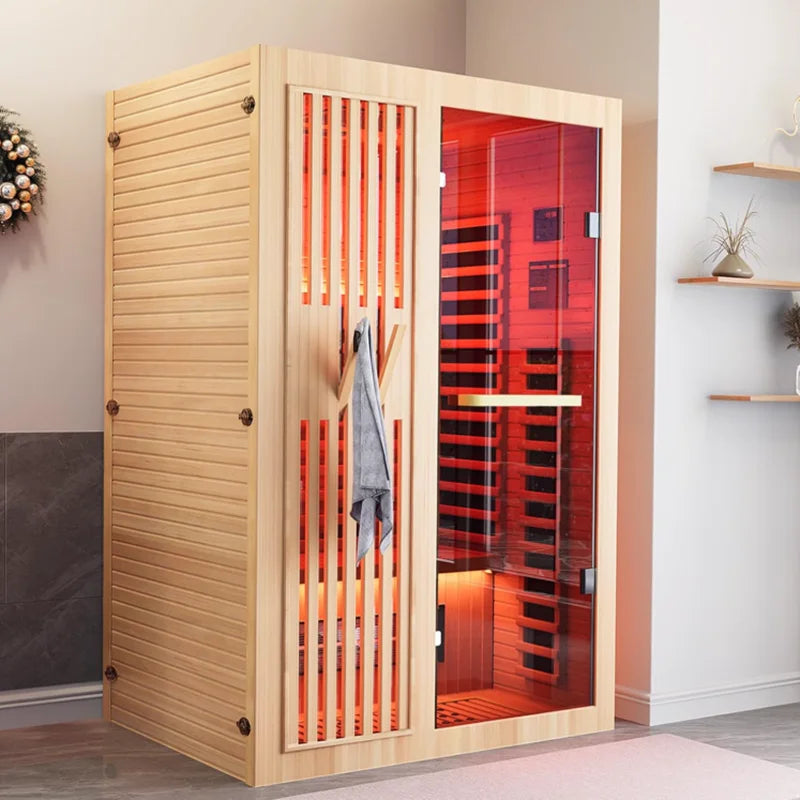
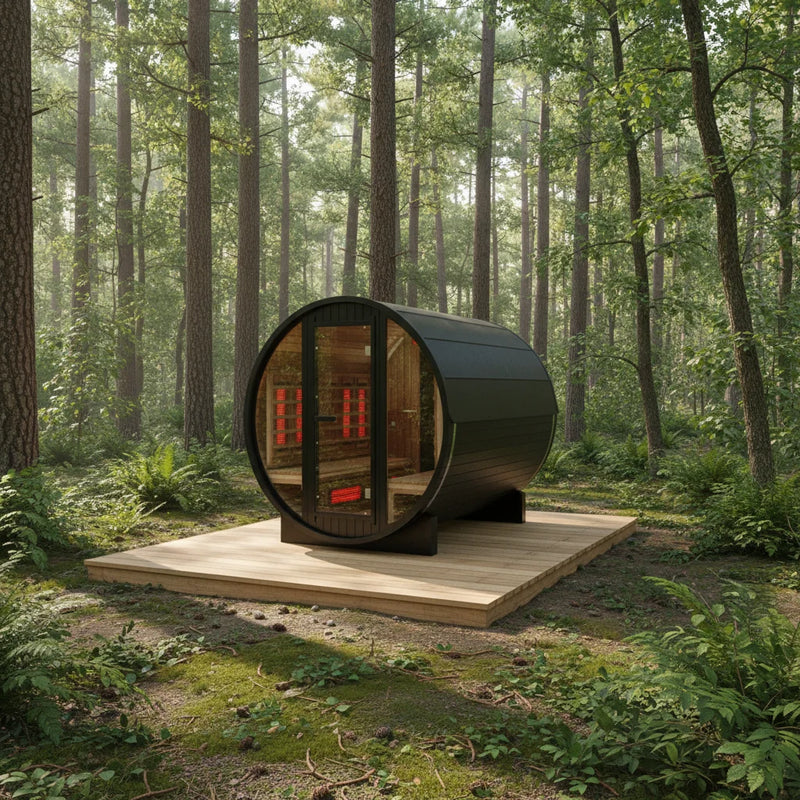
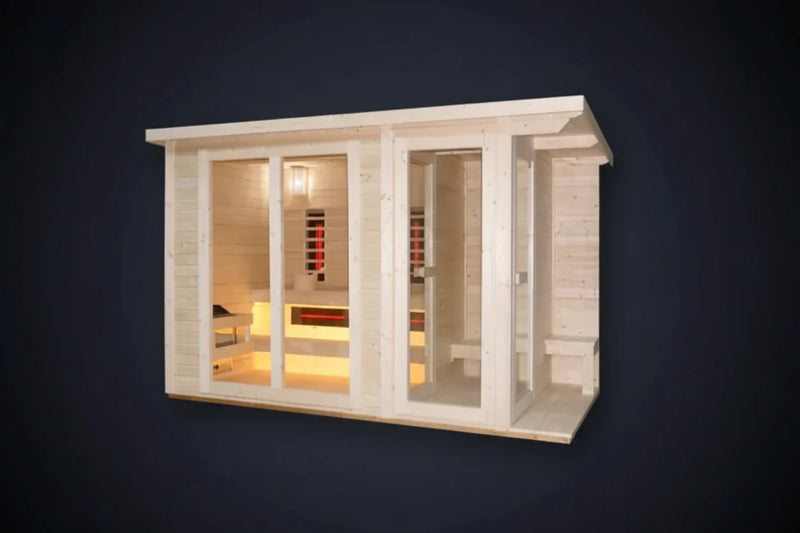
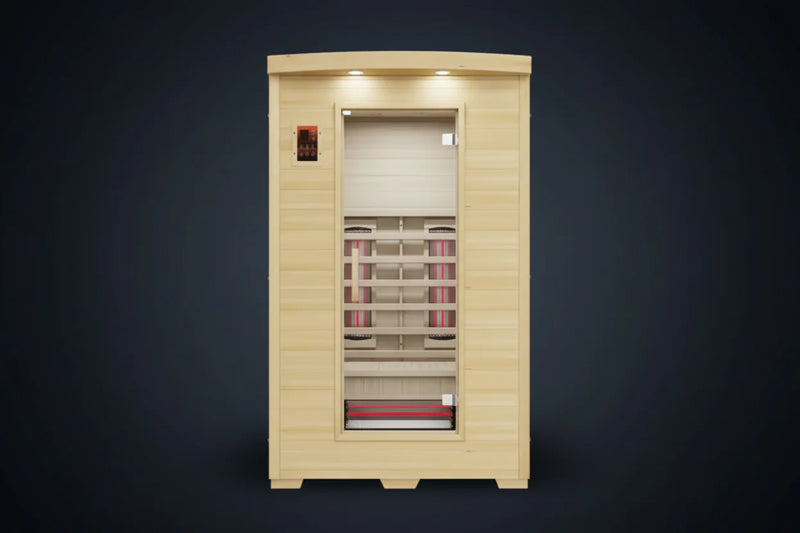
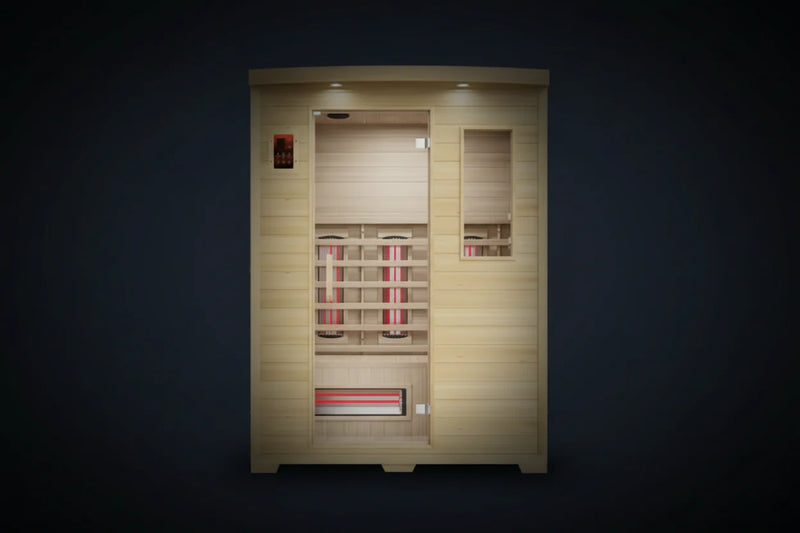
Infrared saunas, the long version.
Infrared saunas use carbon or ceramic emitters to radiate heat directly into the body, rather than warming the surrounding air to high temperatures. The cabin runs at a comparatively gentle 50–65°C — about half the temperature of a traditional Finnish sauna — and produces a deep, sweat-inducing warmth in around twenty-five minutes from cold. The format suits people who find traditional saunas overwhelming, who want a faster warm-up, and who prefer the lower running cost.
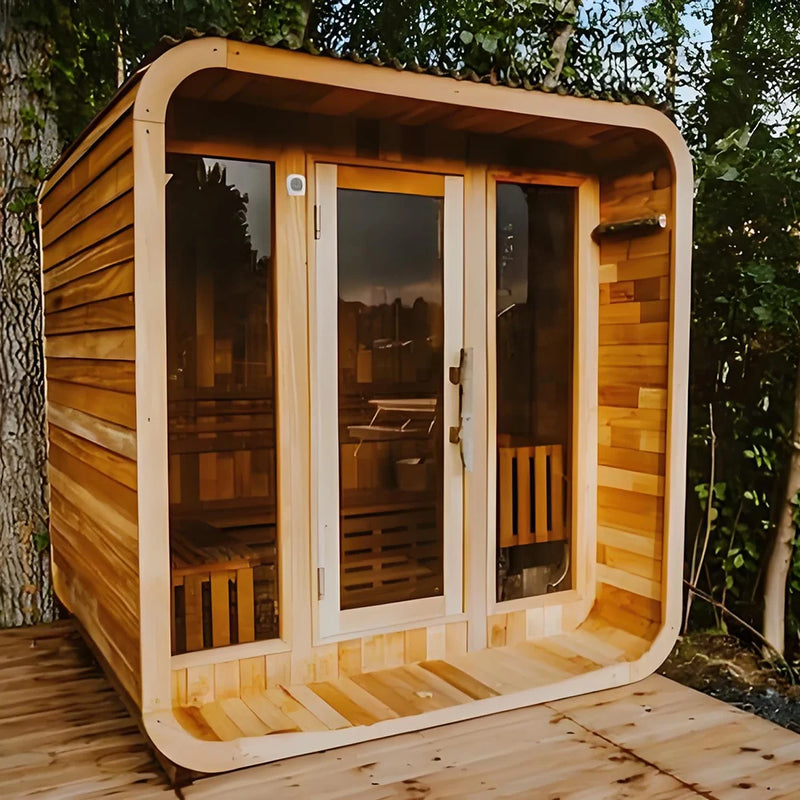
Cabin construction matters more than the marketing usually admits. Western red cedar is the default in our range — naturally rot-resistant, dimensionally stable in dry heat, and lightly aromatic. Hemlock is paler, denser and a little less expensive. Canadian basswood appears in the cheaper end of the market and is fine if you accept a shorter lifespan. The carbon emitter panels themselves should be CFL (continuous-fibre) rather than printed; CFL panels distribute heat evenly across their surface and read substantially lower on EMF.
UK practicalities: every cabin we sell runs from a standard 13A socket and slots through a 76 cm internal door without disassembly above the two-person size. Ceiling clearance is the dimension most people overlook — a typical cabin is 195 cm tall, which leaves 10 cm in a standard new-build flat with 205 cm ceilings. Ventilation is helpful but not strictly required; the cabin produces moisture, and an opened door for ten minutes after each session is enough.
Asked & answered.
The questions we get most about infrared saunas. Anything missing, the phone is the quickest way through.
Will an infrared sauna fit through a UK door?
Single-person and most two-person cabins fit through a standard 76 cm internal door fully assembled at the panel level. Three-person and larger cabins are delivered flat-packed and assembled in-room. Glass doors and roof panels are detached for transit on every model, so no cabin needs to be lifted whole through a doorframe.
How long does it take to warm up?
From cold, twenty to thirty minutes to reach a 60°C working temperature. The body's sweat response usually starts within the first ten minutes once you are inside, because infrared heats you directly rather than waiting on the air. Many regular users start the cabin, leave the room for ten minutes, then begin a forty-minute session.
What is EMF and should I worry about it?
EMF (electromagnetic field) is generated by any electric heating element. Quality carbon panels read under 1 mG at the user's seat — comparable to standing near a domestic appliance. Older or lower-grade ceramic units read significantly higher. Manufacturers should be willing to share third-party measurements rather than blanket claims.
How much does it cost to run?
A single-person cabin draws around 1.5 kW; a two-person around 2.0 kW; a four-person around 2.6 kW. Sessions of forty minutes work out to roughly £0.30 to £0.80 at UK average tariffs, depending on cabin size and time of day. Less than a tumble-dryer cycle.
What's the difference between far-infrared and full-spectrum?
Far-infrared is the longest, gentlest wavelength and is what 90 percent of cabin heating is doing. Full-spectrum cabins add near-infrared LED panels that produce shorter-wavelength radiation — sometimes marketed as photobiomodulation. The cabin is identical otherwise; full-spectrum is an upgrade rather than a different category.