Red Light Therapy Saunas.
Infrared cabins with integrated red-light therapy panels, far-infrared heat plus 660 nm and 850 nm LED arrays for photobiomodulation, in one footprint and one electrical supply.
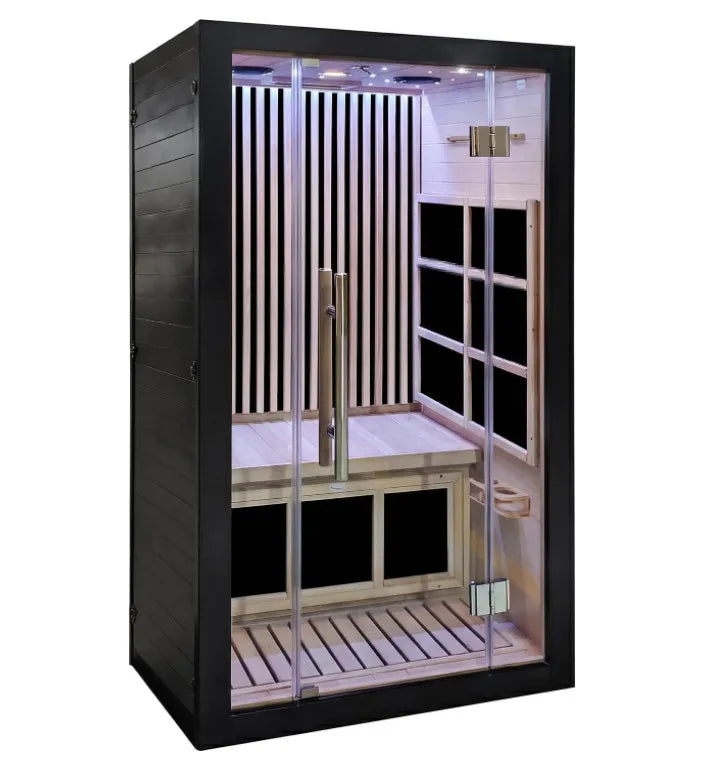
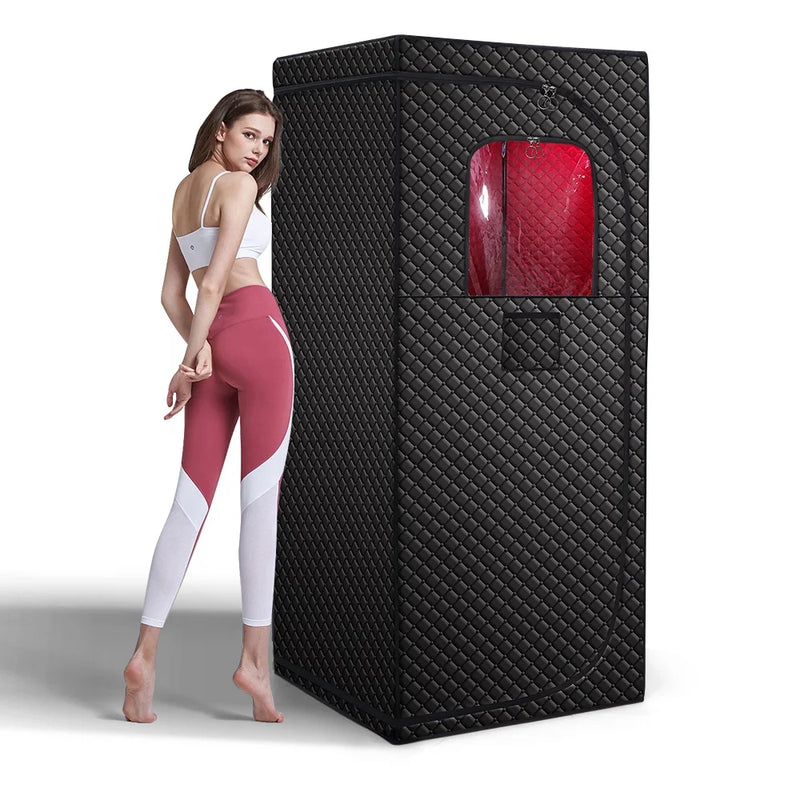
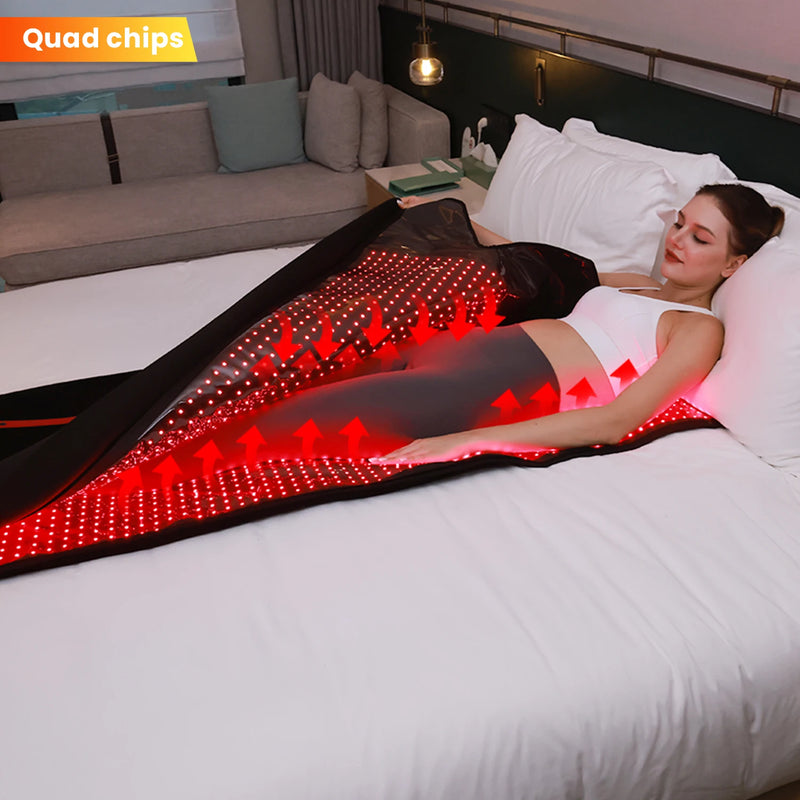
Red-light therapy in a sauna cabin.
Red-light therapy and infrared sauna heat are different modalities that share an electromagnetic family. Red-light, also called photobiomodulation, uses LED arrays at 660 nm (visible red) and 850 nm (near-infrared) at low intensities for short windows of time, targeting skin and superficial tissue. Infrared sauna heat uses far longer wavelengths to warm the body's deeper tissues over a forty-minute session at sauna ambient temperatures.
Combining both into one cabin is a practical decision more than a clinical one. The far-infrared heating system runs at 50-65°C, the LED array sits separately on a tower or rear panel, and the two operate independently. Most owners use the LEDs for ten to fifteen minutes during cabin warm-up, then enjoy the sauna proper for thirty minutes with the LEDs switched off. The heat alone is not what photobiomodulation needs.
If you are buying primarily for red-light therapy, a dedicated wall-mounted panel will give you higher irradiance per square centimetre at lower upfront cost. If you are buying primarily for sauna and want red-light as an add-on, an integrated full-spectrum cabin is more elegant. Reasonable households can land on either side of that decision, depending on whether sauna or red-light is the primary use case. There is no objectively better path.
Asked & answered.
Common questions about red light therapy saunas. Anything missing, call or email us.
Are 660 nm and 850 nm the right wavelengths?
These are the two most-studied wavelengths in the photobiomodulation literature. 660 nm is visible red and acts on the skin's surface; 850 nm is near-infrared and penetrates more deeply. Combinations of both are common; standalone units of one or the other are also reasonable. Wavelengths outside this range are usually marketing rather than evidence-led.
Do I need eye protection?
Yes, bright red-light LEDs at close range are uncomfortable for the eyes even though they are not damaging at typical exposure levels. Most cabins ship with a pair of orange-tinted protective glasses. If yours does not, any standard photobiomodulation eye-protection set works.
How far from the LEDs should I sit?
Manufacturer guidance is typically 30-60 cm from the panel surface. Closer is not necessarily better, at very close range the irradiance can exceed the dose recommended by the literature. Most cabin LED towers are positioned to put the user at the correct distance from a normal seated posture.
Will the LEDs make the cabin warmer?
Marginally, perhaps half a degree. Near-infrared LEDs do produce some warmth at the surface they illuminate, but the contribution to overall cabin temperature is negligible. The cabin's far-infrared system does the heavy lifting.
Can I retrofit red-light panels to an existing cabin?
Yes. Standalone wall-mounted red-light panels can be added to any cabin, plugged into a separate socket. Internal LED towers are harder to retrofit because of cable routing through the wood, but external panels work well as an add-on.