A daily ritual,
built for living.
Hand-built infrared cabins, cedar barrel saunas and portable retreats — designed and built in the Cotswolds by a small team of craftspeople.
What our owners come back to.
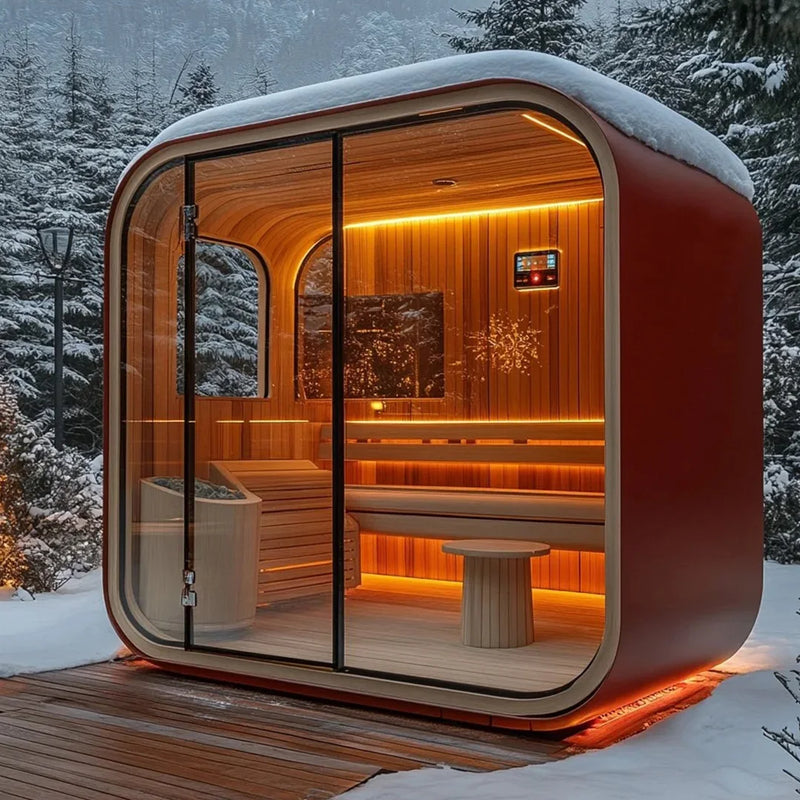
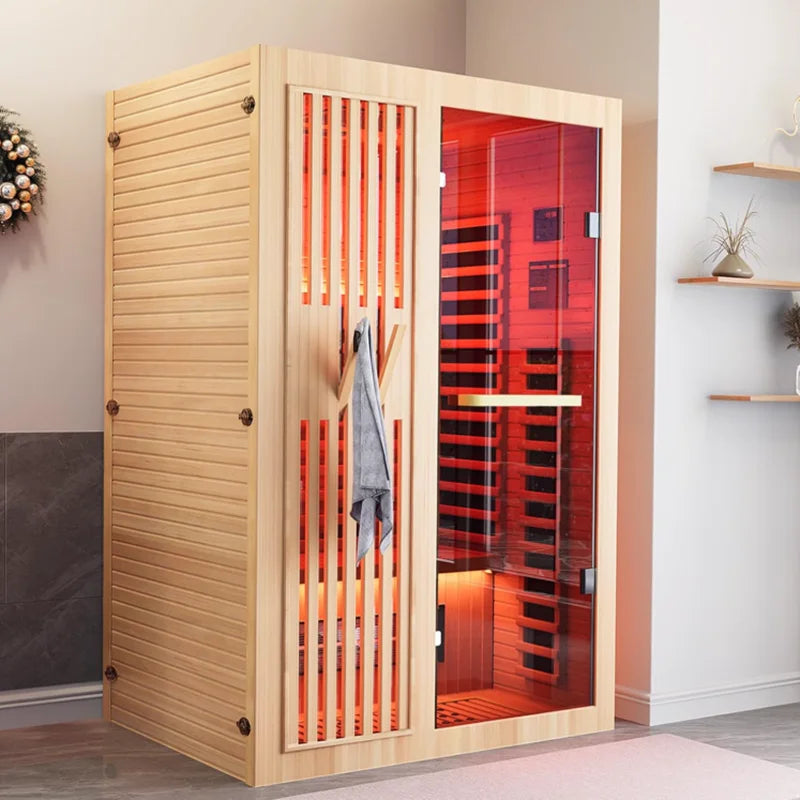
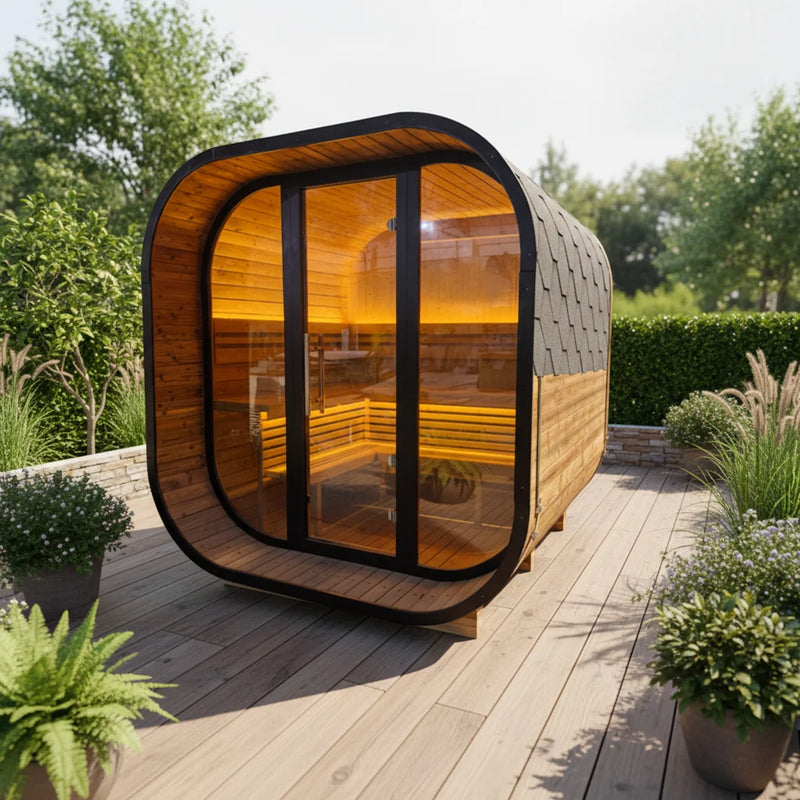

Three weeks of quiet work, in a workshop that smells of cedar.
Every Telos cabin is built to order in the Cotswolds by a small team of fourth-generation joiners. We use only thermo-treated British woods, low-EMF heaters from Tylö, and brass fittings from Skultuna — a Swedish foundry founded in 1607.
How to choose an infrared sauna in 2026 — a 7-minute read for the careful buyer.
Infrared saunas heat the body directly with light, rather than warming the air around it. The result is a deeper sweat at lower ambient temperatures (45–60°C versus 80–100°C in a traditional sauna), which most people find more tolerable — especially for sessions over 30 minutes.
There are three things that genuinely matter when choosing one: the wavelength of the heaters (full-spectrum is best, far-infrared alone is fine), the EMF rating (under 3mG is the medical-grade standard), and the wood (avoid plywood; thermo-treated British softwoods are the gold standard).
Below is the framework we use with every customer who books a consultation. It's the same one we'd use if we were buying for ourselves — and it's the reason 94% of Telos buyers say they'd buy again.
If you'd rather skip the reading, our team is on a video call within 24 hours. No commission, no pressure — just plain advice from people who use these every day.
Asked & answered.
How much space do I need for an infrared sauna at home?
A two-person cabin needs roughly 1.5m² of floor and 2m of head height, plus 30cm of ventilation clearance behind. We can ship pre-assembled or in flat-pack — the smaller cabins fit through a standard 76cm door.
Do I need a special electrical circuit?
Most cabins up to three-person run on a standard 13A UK plug. Larger four- and six-person cabins need a 32A circuit, which any qualified electrician can install in under two hours. We send a guide with every order.
What's the difference between near, mid, and far infrared?
Far-infrared penetrates roughly 4cm into the body and produces the deep cardiovascular sweat. Near-infrared (red light) sits at the skin's surface and is associated with collagen and recovery. Mid-infrared sits between — full-spectrum cabins use all three.
How often should I use it?
For general wellness, 3–4 sessions of 30–40 minutes per week is plenty. Athletes recovering from training often go daily. We include a starter protocol PDF written by Dr. Anna Lindqvist with every cabin.
Is it safe during pregnancy?
Most clinicians advise against sauna use in the first trimester. From the second trimester onwards, lower-temperature infrared (under 50°C) for shorter sessions is generally considered safe — but please check with your own midwife or GP first.