Ice Baths with Chiller.
Ice bath bundles with integrated or paired chillers. The chiller holds the tub at your chosen temperature year round, removes the daily ice habit, and extends water life from days to weeks.
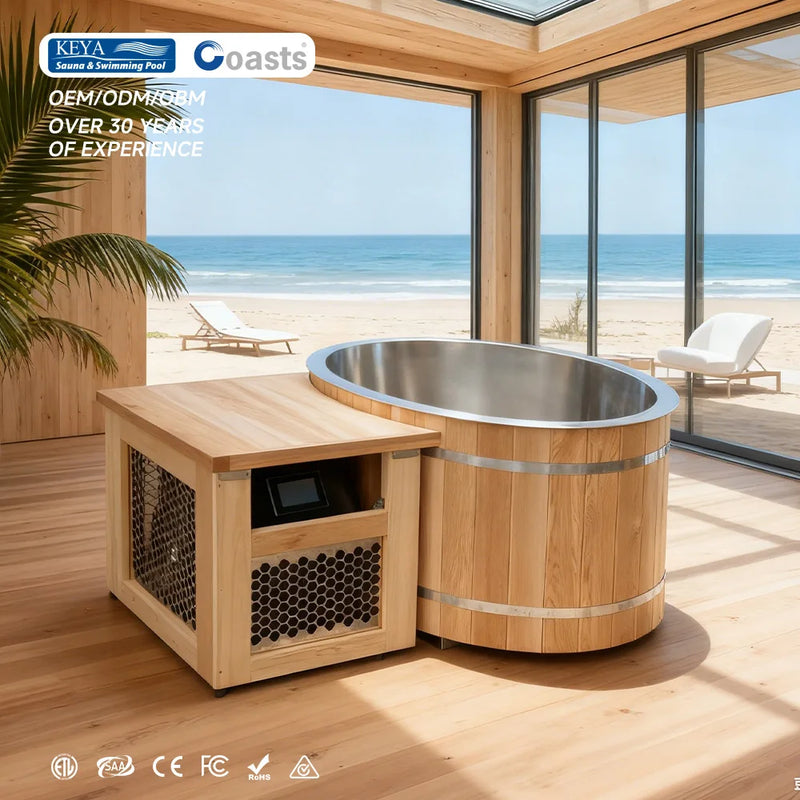
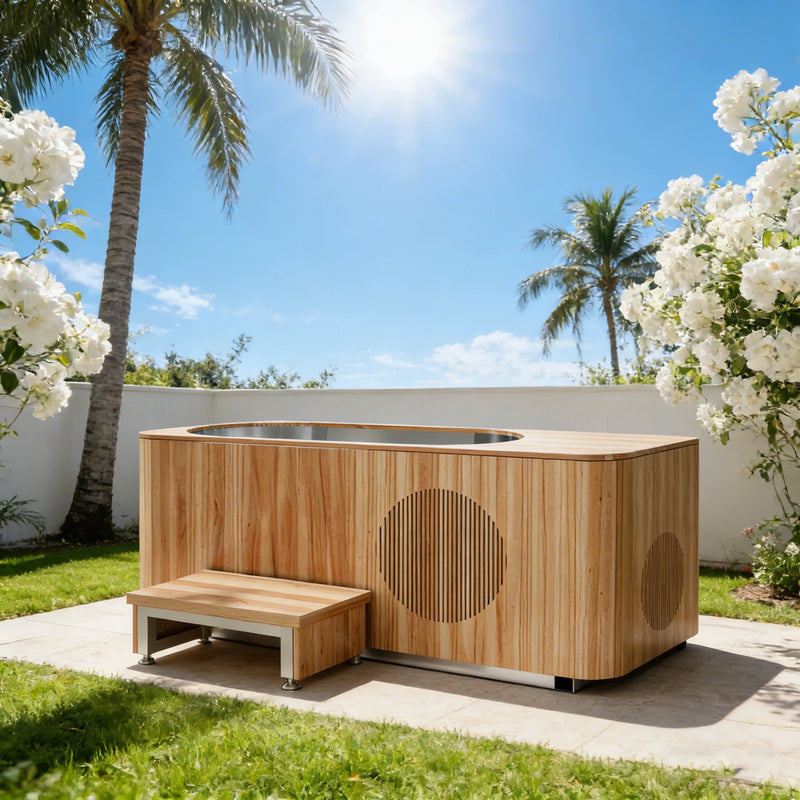
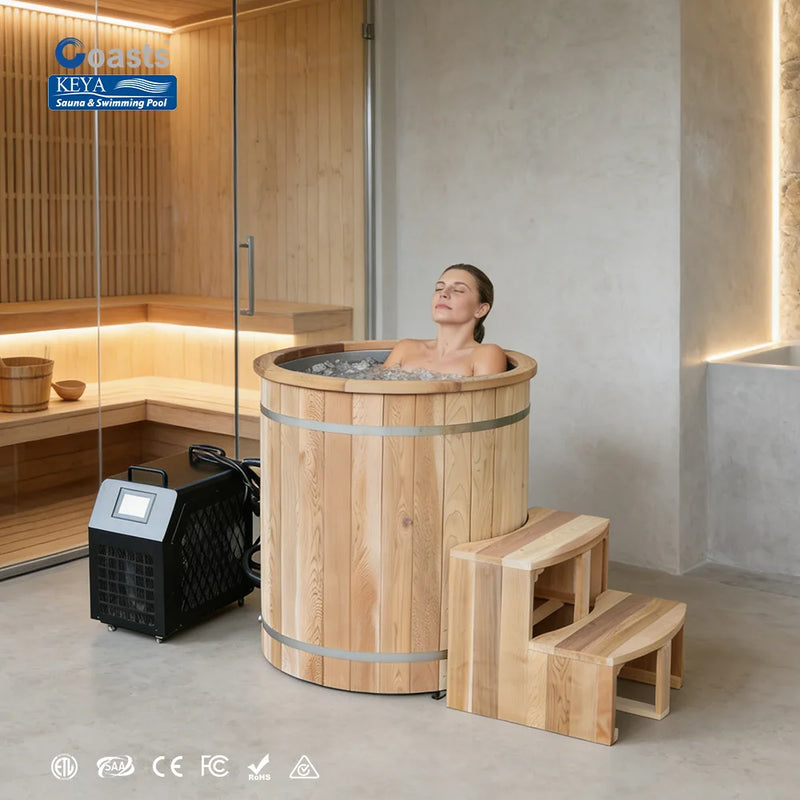
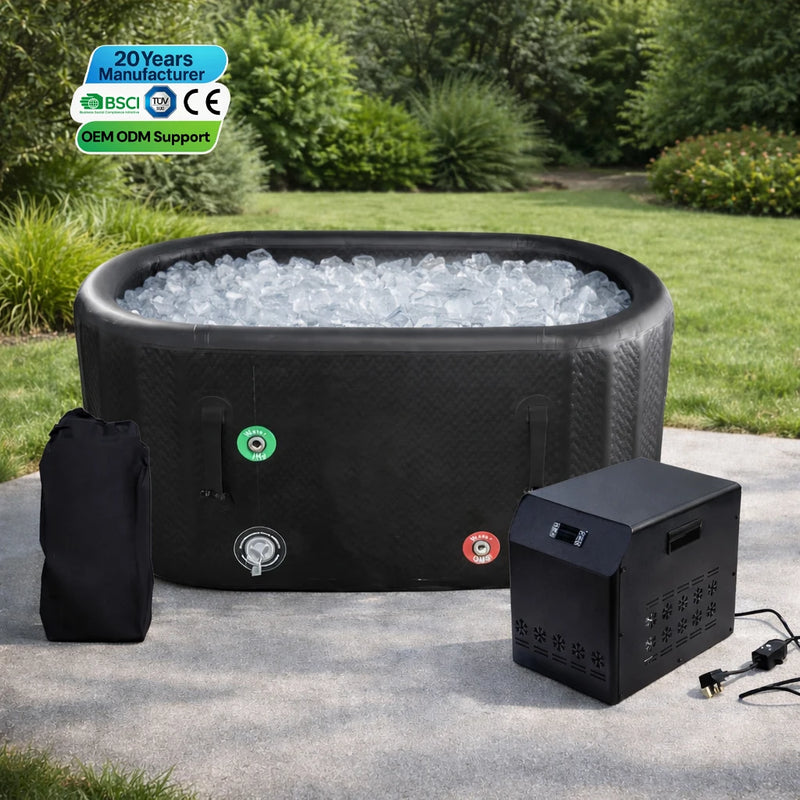
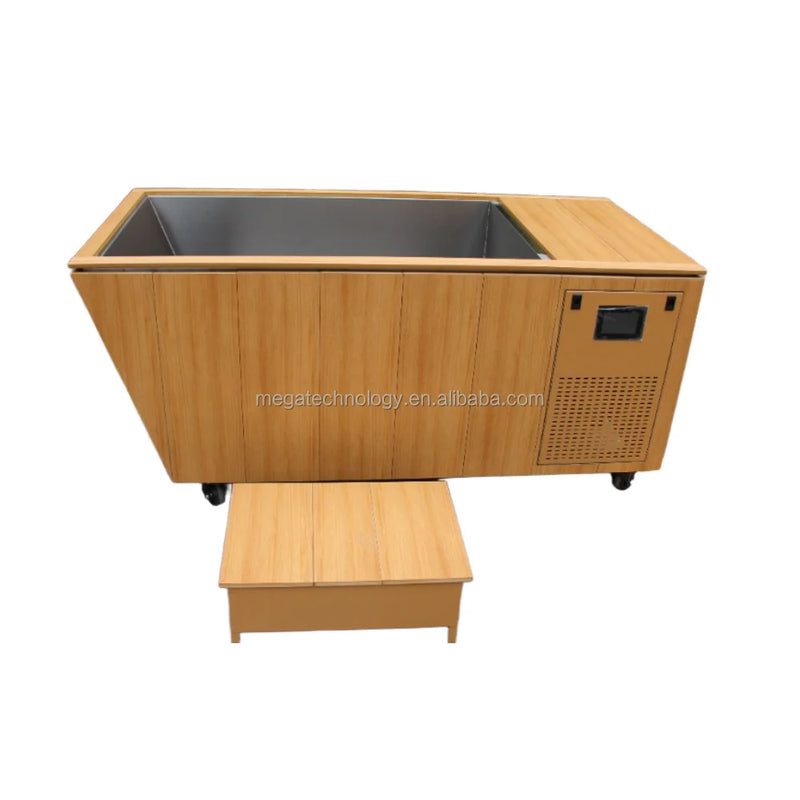
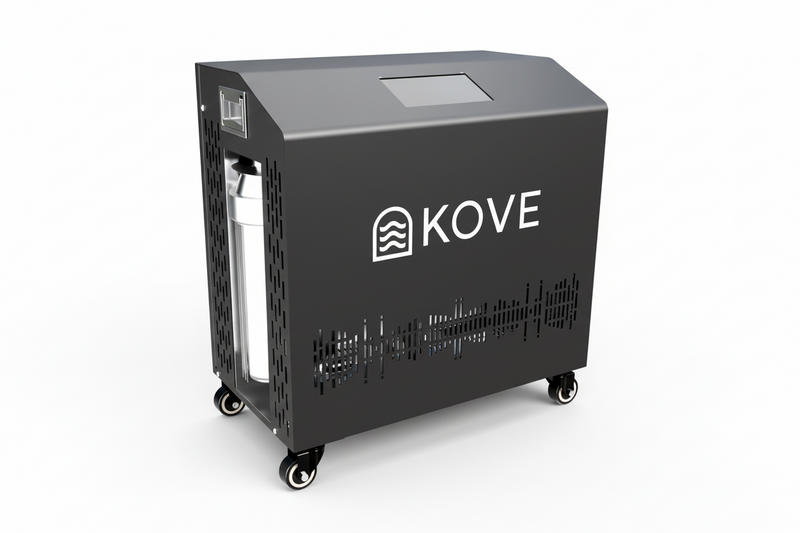
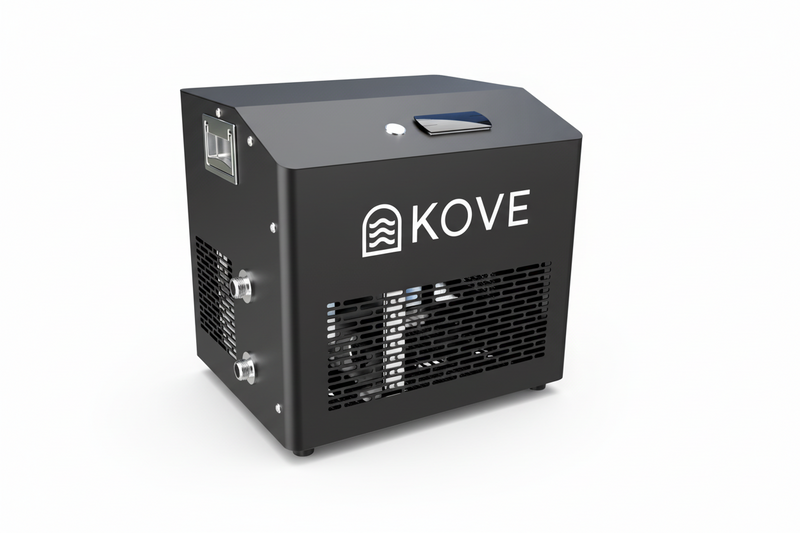
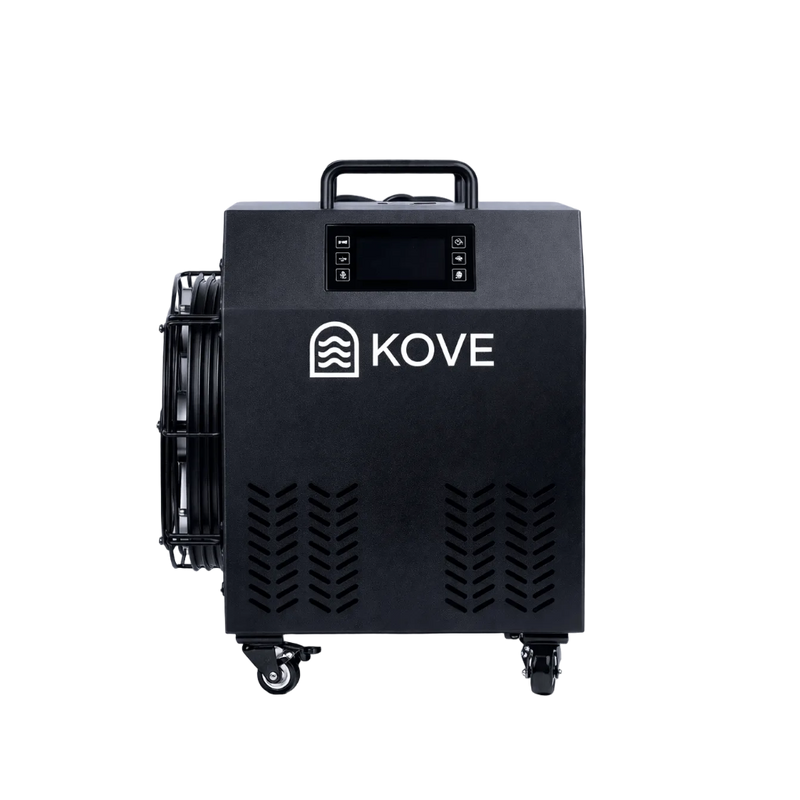
Chiller-fed ice baths, what changes when you add one.
Adding a chiller to an ice bath transforms the daily routine. Without a chiller, you fill the tub, dose it with ice, use it, and either accept temperature drift or top up with more ice for the next session. With a chiller, you set a target temperature once and the unit holds it indefinitely. The water cycles through a refrigeration unit at 5-15 litres per minute, passes a UV or ozone sanitiser, and returns to the tub clean and at temperature.
The chiller's specification matters. For a 300-litre tub used daily and held at 8°C, a 1/4 hp unit is sufficient. For 500-litre tubs or daily use at 4°C, a 1/2 hp unit is more appropriate. Undersized chillers run continuously and shorten compressor life; correctly sized units cycle on and off and last ten to fifteen years. The chiller's power draw at typical UK ambient temperatures is around 600-900W when active, cycling on for ten to fifteen minutes per hour with a properly insulated tub.
Sanitation is the other piece of the puzzle. UV-C lamps inactivate microorganisms as water passes the lamp; ozone generators do the same job from a different angle. Both keep water clear for six to eight weeks of daily use rather than the five to seven days you would manage with manual ice. Filter cartridges need cleaning every two weeks and replacing every six months. The whole system, set up correctly, is less work than a domestic fish tank.
Asked & answered.
Common questions about ice baths with chiller. Anything missing, call or email us.
What does a chiller cost to run?
A 1/4 hp chiller running for a properly insulated 300-litre tub at 8°C draws roughly 4-8 kWh per day in summer and 2-4 kWh per day in winter, call it £30 to £60 a month at average UK tariffs. An insulated cover halves the figure.
How loud is the chiller?
Around 50-55 dB at 1 m when actively cooling, similar to a domestic refrigerator. The unit cycles on for ten to fifteen minutes per hour rather than running continuously. Most owners place the chiller behind the tub or in an adjacent shed; out of direct sight does not affect performance.
Can the chiller live indoors?
Yes, in a utility room or garage with reasonable ventilation. The chiller exhausts warm air during operation; in a small enclosed space, ambient temperature rises significantly and the unit works harder. A garage with a ventilation grille is ideal; a sealed cupboard is not.
How often do filters need attention?
Mechanical filter cartridges need rinsing every two weeks and replacing every four to six months at typical use levels. UV bulbs need replacing annually whether they look working or not, UV output degrades silently. Ozone generator cells are typically rated for two to three years.
What temperature can a chiller actually achieve?
Most domestic chillers hold 3°C as the lower bound. Going below 3°C invites ice formation in the chiller's heat exchanger, which damages the unit. 4-8°C is the sensible operating range for daily home use; 3°C is achievable but not recommended as the standing target.