Outdoor Infrared Saunas.
Outdoor-rated infrared cabins for the garden. Treated exterior shell, weatherproof seams, and the same low-EMF carbon panels as our indoor range. Built for British weather rather than tolerated by it.
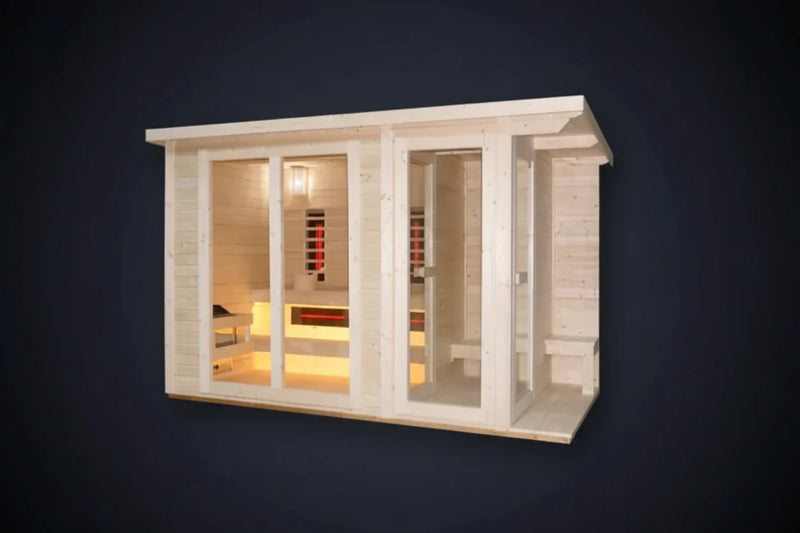
Outdoor infrared saunas, built for the British climate.
An outdoor infrared cabin gives you the gentler heat profile of indoor infrared with the architectural presence of a garden sauna. The exterior is built differently from an indoor unit: marine-grade seals at every panel joint, a treated cedar or thermo-aspen shell that withstands frost cycles, and a roof pitch that sheds rain rather than letting it pool. The interior remains the same far-infrared carbon emitter system that runs at 50–65°C.
Why choose outdoor infrared rather than a traditional outdoor barrel? Three reasons. First, the cabin runs from a 13A or 16A socket — no flue, no smoke, no fuel storage. Second, warm-up is twenty-five minutes rather than the forty-five to sixty minutes a traditional outdoor stove needs in winter. Third, the interior temperature is more forgiving for daily use; many owners cycle through a fifteen-minute infrared session each evening rather than committing to a full traditional bake.
Practical setup: a level concrete or paving base 5 cm wider than the cabin footprint on each side, an outdoor-rated 13A or 16A socket within 3 m, and ideally some shelter from prevailing weather. The cabin will operate down to ambient temperatures of -10°C, though warm-up time extends meaningfully below 0°C. Most owners insulate the path between cabin and house with a covered walkway — useful in February and pleasant in October.
Asked & answered.
The questions we get most about outdoor infrared saunas. Anything missing, the phone is the quickest way through.
Will an outdoor infrared cabin survive a UK winter?
Yes. The cabin is engineered for ambient temperatures down to -15°C. Warm-up takes longer in cold weather — around forty minutes from -5°C compared with twenty-five from 10°C. The treated cedar exterior handles rain, frost and snow without intervention; an annual oil treatment in autumn extends its working life.
Do I need planning permission?
For most freestanding cabins in a domestic garden, no — they fall under permitted development if under 2.5 m at the eaves and not within 2 m of a boundary. Listed properties, conservation areas and certain leaseholds may differ. Check with your local planning authority if uncertain.
What kind of base do I need?
A level concrete pad or set of paving slabs at least 5 cm wider than the cabin footprint on every side. The base must be flat to within 5 mm over the cabin's length to ensure door seals work and panel joints stay aligned. Existing patios are usually adequate.
How is the electrical supply run outdoors?
An outdoor-rated 13A or 16A socket fed from the house consumer unit via SWA cable buried at 450 mm or run in armoured trunking. The cable should terminate in an IP66 weatherproof outdoor socket within 3 m of the cabin. An electrician will handle this in a half-day.
What maintenance does the exterior need?
An annual oil or wax treatment with a UV-resistant exterior cedar oil — a forty-minute job each autumn. Inspect roof flashing at the same time and clear any leaves from the drip channels. With this routine, the exterior shell will last fifteen to twenty years before needing replacement.