How to Buy a Home Sauna in the UK: The Complete Guide
By Telos Wellness Editorial Team. Last reviewed 15 July 2026.
Buying a home sauna in the UK in 2026 means a choice between infrared and traditional Finnish formats, a 1–4 person capacity decision, and an indoor or outdoor installation. Purchase prices range from £1,500 for an entry-level 1-person infrared cabin to £12,000+ for a premium outdoor Finnish room. Electrical requirements vary from a standard 13A plug for small cabins to a notifiable 32A circuit for larger units. This guide covers every decision a UK buyer faces.
Is a home sauna worth it in the UK?
Home saunas are sold in the UK by specialist retailers (Telos Wellness, Vidalux, Finnmark, UK Saunas, Sun Home Saunas), national chains stocking selected models (John Lewis, B&Q for entry-level kits), and direct-from-manufacturer for premium Finnish brands (Tylö, Harvia). Most UK buyers order online with delivery to the home. In-showroom viewing is available at limited locations; specialist retailers offer virtual consultations and assembly drawings before purchase.
The decision to install at home rather than rely on commercial provision is driven by three considerations: convenience, cost over time and consistency of use. The UK has very few public saunas relative to the Nordic baseline, and outdoor commercial saunas of the kind common in Finland are rare. A home installation is therefore the practical route to consistent year-round sauna bathing in most parts of the UK. The sauna sleep and stress article covers the behavioural mechanism that makes daily use viable.
Health benefits backed by evidence
The published evidence base for regular sauna bathing concentrates on traditional Finnish protocols, with growing supplementary literature on infrared. Cardiovascular endpoints, all-cause mortality and reduced incidence of major adverse cardiac events have been reported in long-running Finnish cohort studies. The relevant physiological mechanism is heat-shock-protein induction, which begins at a core body temperature near 38.5°C and is reviewed in depth in the heat-shock proteins explainer. Frequency rather than session duration appears to drive most of the dose-response curve.
When the purchase pays back against commercial alternatives
A home sauna becomes financially worthwhile after roughly 18 months of regular use against UK commercial sauna day-pass spend (£15–£30 per visit). For a buyer who uses a sauna twice a week, the cumulative pass spend at 18 months matches the purchase price of a 2-person infrared cabin. Below one session per week, the payback period extends past 5 years and the financial case weakens.
The payback calculation is sensitive to assumed pass price and session frequency. At £20 per day-pass and two sessions per week, cumulative commercial spend reaches £2,080 in twelve months and £3,120 at eighteen months — comfortably within the price band of a mid-range home cabin. A buyer using the sauna four times a week halves the payback period to nine months. A buyer using it monthly never breaks even against pass spend; for that user profile the financial case for the cabin is weak and the case rests on convenience alone.
Format choice: infrared vs traditional Finnish
Format is the first material decision a UK buyer makes. Infrared cabins use radiant heat from carbon, ceramic or full-spectrum LED emitters and operate at 45–60°C ambient. Traditional Finnish saunas use convective heat from an electric or wood-fired stove plus optional steam from water poured on heated stones, and operate at 80–100°C. Sauna blankets sit alongside both as a low-capex alternative. The two cabin formats deliver an equivalent core-temperature target by different routes, with different running costs, install demands and aesthetic profiles.
| Attribute | Infrared cabin | Traditional Finnish sauna | Sauna blanket |
|---|---|---|---|
| Operating temperature | 45–60°C | 80–100°C | 50–75°C |
| Session length | 20–45 min | 10–20 min, multiple rounds | 30–60 min |
| Heater type | Carbon / ceramic / full-spectrum | Electric or wood-fired stove with stones | Internal heating wires |
| Electrical draw | 1.2–3.5 kW | 4.5–9 kW | 0.3–0.5 kW |
| Price band (UK 2026) | £1,500–£8,000 | £3,000–£12,000+ | £150–£500 |
| Service life | 10–15 years | 15–25 years | 2–3 years |
Infrared cabins — heat, session length, evidence
Infrared cabins are the dominant home format in the UK market by unit sales. The format suits 13A plug-in installation at the smaller capacities, has lower running cost than traditional, and produces a more easily tolerated heat profile for new users. Carbon emitters are the baseline; ceramic and full-spectrum systems sit at higher price points. The evidence base for infrared is smaller than for traditional saunas but is growing. For format-specific cost detail, the infrared sauna cost calculator works through purchase and running figures in depth.
Traditional Finnish saunas — heat, ritual, evidence
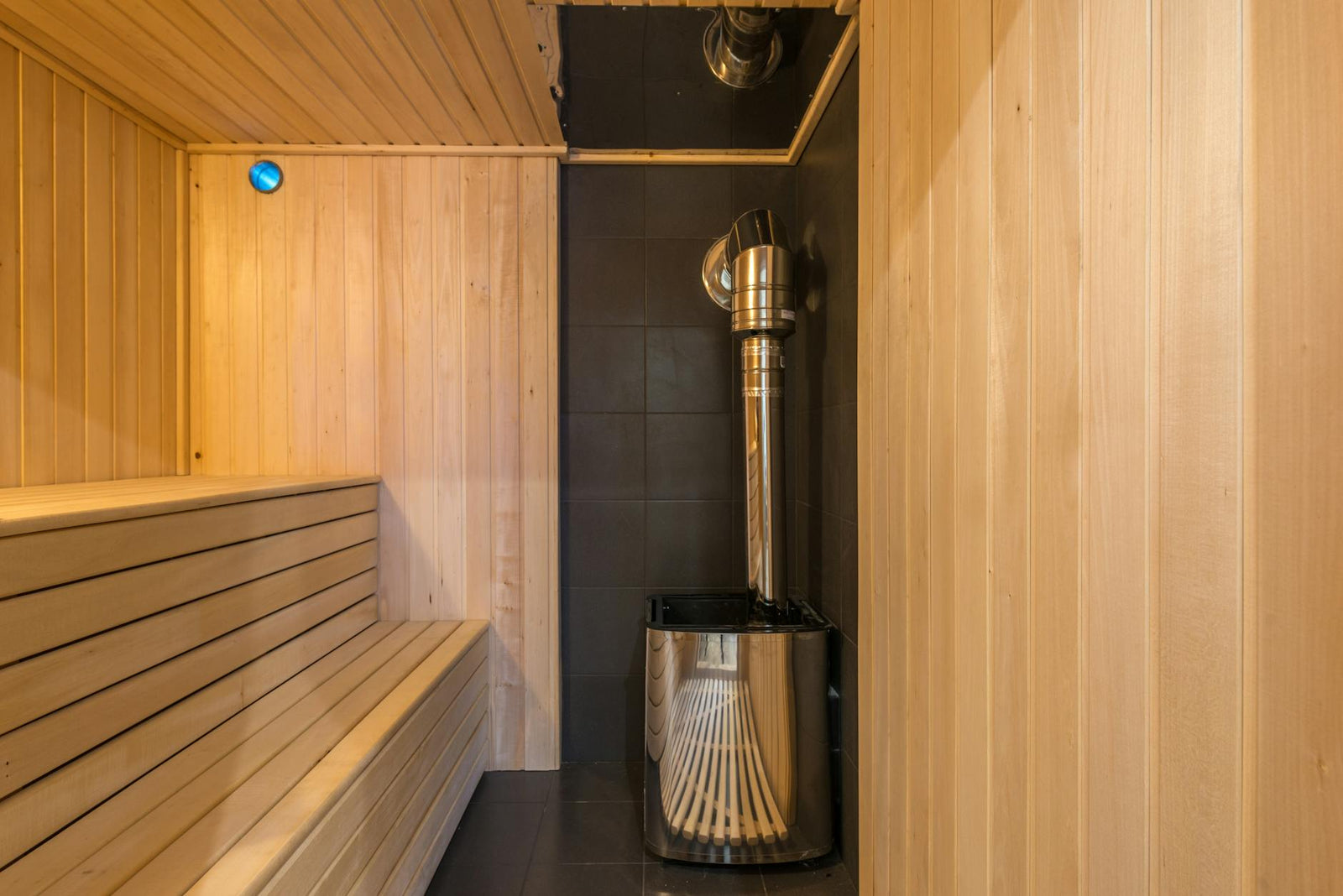
Traditional saunas deliver the heat profile and bathing ritual described in the Finnish cultural tradition and studied in the major cardiovascular cohort literature. The format requires higher electrical capacity (typically 4.5–9 kW for an indoor cabin), produces measurable steam when water is poured on stones, and demands more careful ventilation and wood-shell construction than infrared. Outdoor garden-room installations are the typical premium application. Service life is typically longer than infrared at 15–25 years.
Sauna blankets compared
Sauna blankets are sub-£500 single-occupancy alternatives that wrap around the user lying on the floor or a bed. The format avoids the floor-space and electrical commitment of a cabin but offers reduced surface coverage, no upright sitting position, and a shorter 2–3 year service life. Blankets pay back quickly against day-pass spend but require frequent replacement and do not replicate the cabin atmosphere.
Sizing: 1, 2, 3 or 4-person
Most UK buyers should size a sauna for one or two occupants. Internal Telos Wellness install data (S019) shows single-occupancy is the dominant use pattern: 71% of recorded home sessions are by a single user, 22% are 2-person, and 7% are 3-person or larger. A 2-person cabin is the optimum compromise for most households — it accepts occasional shared sessions and reclining use without the footprint or electrical penalty of a 4-person.
Single-occupancy reality (most home use is solo)
The 71% single-occupancy figure is consistent across heater format, cabin size and user demographic in the Telos sample. Households that purchase 4-person cabins typically use them as 1- or 2-person cabins in day-to-day practice. The second seat is used for occasional shared sessions or for reclining. The implication is that sizing for hypothetical full-household use results in wasted floor area and a larger electrical circuit than the household will draw on in practice.
Footprint vs UK room and garden dimensions
The table below summarises typical UK room types against the maximum cabin size that fits. Footprint figures are external; allow 50mm rear ventilation clearance and door swing clearance in addition. For the full room-by-room treatment, see the sauna sizing for UK homes article.
| Room type | Typical UK floor area | Typical ceiling height | Maximum cabin size that fits |
|---|---|---|---|
| Ensuite / small bathroom | 2.5–4 m² | 2.3–2.4 m | 1-person infrared |
| Standard family bathroom | 4–6 m² | 2.3–2.4 m | 1- or 2-person infrared |
| Basement utility room | 6–10 m² | 2.1–2.3 m | 2-person infrared (check ceiling) |
| Single garage | 14–18 m² | 2.2–2.5 m | 2- or 3-person, indoor or outdoor model |
| Dedicated wellness room | 8–14 m² | 2.4 m | 3- or 4-person, any format |
| Garden room | Per build | 2.5 m+ | 4-person traditional or large outdoor |
Indoor or outdoor installation?
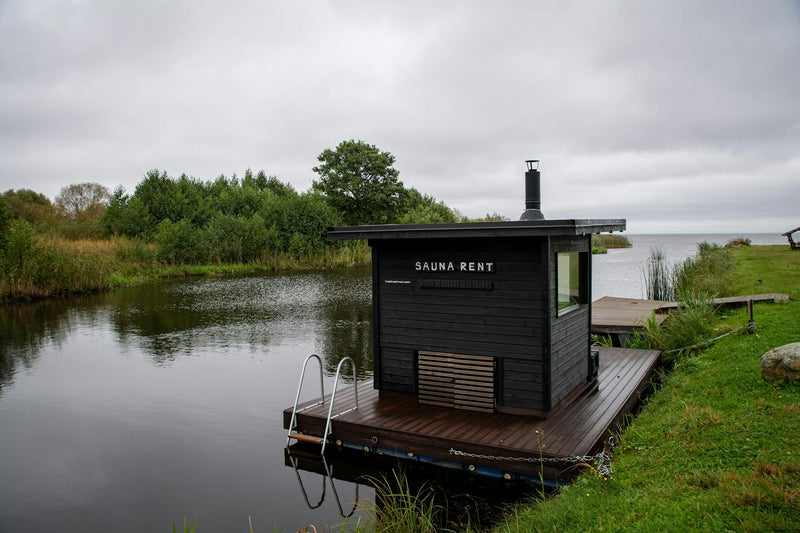
An indoor sauna suits buyers with available indoor space and a preference for daily use; an outdoor sauna suits buyers wanting a dedicated wellness retreat or those without indoor space. Indoor installs are used more often in the Telos sample (median 3.5 sessions per week vs 1.8 for outdoor) because the cabin is steps away rather than requiring a walk into the garden. Outdoor installs cost £600–£3,000 more once a concrete base, weatherproof shell and armoured cable run are factored in. The indoor vs outdoor sauna decision article covers the six-factor decision matrix in detail.
Indoor — ventilation, floor protection, ceiling clearance
Indoor installation requires three additional provisions over and above the cabin itself: mechanical ventilation to clear humidity from the surrounding room (typically a 60+ litre-per-second extract fan on a humidistat), waterproof flooring or a fitted floor pan beneath the cabin, and a clear ceiling height of at least 2.1m. Bathrooms with existing Part F-compliant extract often meet the ventilation requirement without additional work. Basement and internal rooms without windows may need a new ducted extract run.
Outdoor — base, weatherproofing, electrical run, security
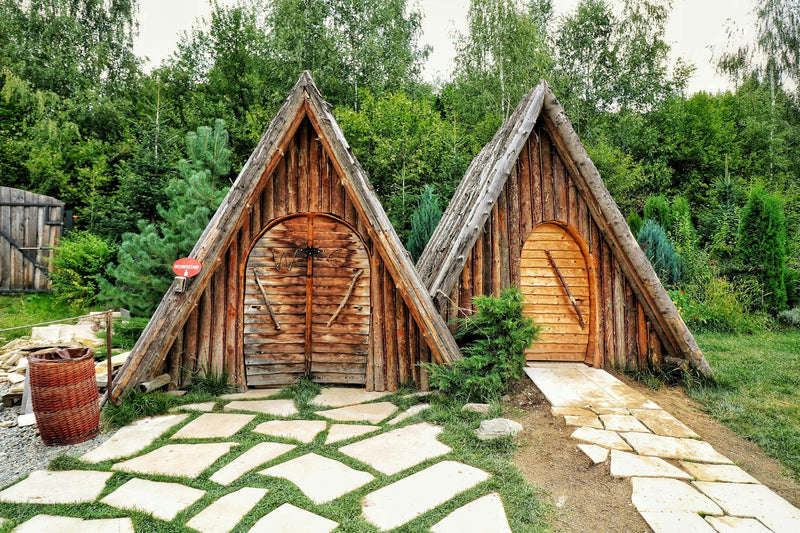
Outdoor installation requires a stable base (concrete pad or paving slabs to a level tolerance below 5mm), a weatherproof external cladding rated for UK climate exposure, a steel-wire-armoured (SWA) cable run from the consumer unit to the cabin, and an IP-rated junction box at the cabin end. Most outdoor buyers also add PIR-activated security lighting and notify their home insurer of the new outbuilding. The full process is covered in the where to install a home sauna article.
Electrical requirements: 13A, 16A or 32A
A home sauna needs one of three electrical supply types. Small 1-person infrared cabins under 2.5 kW plug into a standard 13A UK socket. Mid-range cabins between 2.5 and 4 kW require a dedicated 16A circuit. Traditional Finnish heaters above 4.5 kW require a 32A circuit. Any work installing a new dedicated circuit is notifiable under Approved Document P and must be certified by a Part P-registered electrician under BS 7671:2018+A2:2022.
| Cabin size and format | Typical power draw | Required circuit | Notifiable (Part P) | Indicative install cost |
|---|---|---|---|---|
| 1-person infrared | 1.2–1.8 kW | 13A standard plug | No | £0 |
| 2-person infrared | 1.8–2.5 kW | 13A standard plug (dedicated socket recommended) | No | £0–£120 |
| 3-person infrared | 2.5–3.0 kW | 16A dedicated circuit | Yes | £180–£300 |
| 4-person infrared | 3.0–3.5 kW | 16A dedicated circuit | Yes | £220–£350 |
| 2-person traditional electric | 4.5–6 kW | 32A dedicated circuit | Yes | £280–£450 |
| 4-person+ traditional electric | 6–9 kW | 32A dedicated circuit (3-phase rare) | Yes | £350–£600 |
Standard 13A plug-in cabins
Cabins drawing less than 2.5 kW operate on a standard UK 13A socket. The socket should ideally be dedicated — running additional heavy appliances on the same ring while a session is in progress is not advisable. Extension leads and multi-socket adaptors are not permitted for the fixed sauna supply because the load is continuous rather than intermittent. A 13A plug-in cabin can be relocated within the home without an electrician.
Notifiable circuits under Approved Document P
Approved Document P (S016) sets out which electrical work in a UK dwelling must be notified to Building Control. The installation of a new dedicated circuit supplying a sauna falls inside the notifiable category. The work must be carried out by an electrician registered with a competent-person scheme (NICEIC, NAPIT, ELECSA, STROMA or equivalent). BS 7671:2018+A2:2022 (S017) governs the technical specification: cable size, circuit protection device, earth-fault loop impedance and the requirement for residual current device (RCD) protection on circuits in special locations such as bathrooms.
What a Part P-registered electrician will charge
A new dedicated 16A circuit typically costs £180–£350 in the UK depending on cable run length and consumer-unit capacity. A 32A circuit for a traditional heater costs £280–£450. The figure includes the cable, MCB or RCBO at the consumer unit, an isolator switch local to the cabin, and the Electrical Installation Certificate. Where the consumer unit is full or where the existing unit predates the 17th edition of BS 7671, a consumer-unit upgrade may be required separately at £400–£700. The sauna delivery and install UK article covers the full sequence.
Wood and build quality
A UK home sauna buyer should evaluate seven attributes: format (infrared or traditional), capacity, wood material, heater specification, electrical requirement, warranty term, and the UK delivery and aftercare arrangement. Premium indicators include a 5+ year warranty, kiln-dried solid wood (not veneered), a heater EMF measurement below 3 milligauss for infrared cabins, and a UK-based customer support line for service calls.
Hemlock, cedar and thermo-aspen compared
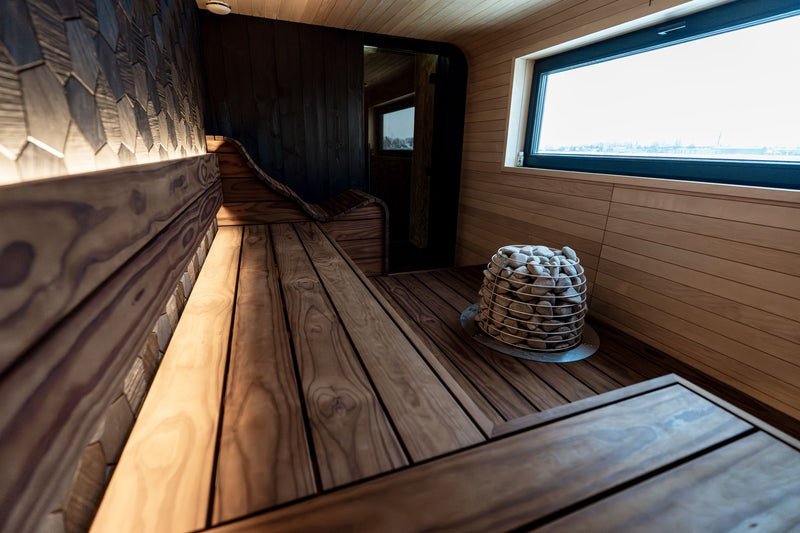
Canadian hemlock is the baseline species for UK home cabins. The Sauna Society of Finland technical bulletin on wood materials (S018) classifies hemlock as suitable for indoor low-temperature applications and notes that its dimensional stability at infrared operating temperatures is adequate; it is not suitable for outdoor exposure. Western red cedar (BS EN 350-2 durability class 2) is the traditional aromatic species, suitable for both indoor and outdoor cabins, with a 15–25% price premium. Thermo-aspen, a heat-treated species with very high dimensional stability and class 1–2 durability, adds approximately 30% to the cabin price and is the preferred specification for high-end indoor cabins where movement under thermal cycling must be minimised.
Joinery, glass, controller and bench finish
Tongue-and-groove joinery indicates a higher build tier than butt-joint construction. Visible knot grade should be consistent across the cabin shell; clear-grade (knot-free) is the premium option. Door glass should be 6–8mm tempered safety glass with a positive-engagement magnetic seal. Digital touchscreen controllers are the current baseline; WiFi and app control sit in the premium tier. Bench surfaces should be solid wood rather than veneered, with a smooth finish that does not snag towels or trap moisture in seams.
Planning permission for a garden sauna
An indoor home sauna does not require planning permission in the UK. An outdoor garden sauna is treated as an outbuilding under Class E permitted development and is exempt from planning permission if it sits below 2.5m in height within 2m of a boundary, covers no more than 50% of the garden, and is not in a listed-building curtilage, conservation area or Article 4 zone.
Class E permitted development rules
Class E of the Town and Country Planning (General Permitted Development) Order is the route by which most outdoor garden saunas avoid a planning application. The Planning Portal guidance (S015) lists the conditions: the building must be incidental to the enjoyment of the dwelling, must not be forward of the principal elevation, must not exceed 50% combined garden coverage with other outbuildings, and must respect the height limits in the next subsection.
Height limits, boundary distances, conservation areas
The height limit is 2.5m for outbuildings within 2m of any boundary. Outbuildings further than 2m from any boundary may reach 4m with a dual-pitched roof or 3m with any other roof type. The 50% garden-coverage rule is calculated against the original curtilage. Listed buildings, conservation areas and properties with an Article 4 direction in force lose permitted-development rights and must apply for planning consent. The garden sauna planning permission article walks through the full rule set.
Cost: capex, install and 5-year ownership
A UK home sauna costs £1,500 to £12,000+ in 2026. Entry-level 1-person infrared cabins start near £1,500. Mid-range 2-person infrared cabins sit at £2,800–£4,500. Premium 4-person infrared or traditional Finnish cabins reach £6,000–£8,000. Outdoor garden rooms with traditional heaters and Nordic-spruce shells reach £8,000–£12,000+. Running costs add £21–£60 per year at two sessions per week on the UK price cap.
Purchase price bands by format and size
| Spec tier | 1-person IR | 2-person IR | 4-person IR | 2-person traditional | 4-person traditional outdoor |
|---|---|---|---|---|---|
| Entry-level | £1,500 | £2,200 | £5,500 | £3,000 | £6,500 |
| Mid-range | £1,900 | £3,400 | £6,800 | £4,500 | £9,000 |
| Premium | £2,400 | £4,500 | £8,000 | £6,500 | £12,000+ |
Running cost at the UK price cap
Running cost is calculated at the Ofgem price cap of 27.03p per kWh, effective from January 2026. A 2-person infrared cabin drawing 2.2 kW at two 45-minute sessions per week costs roughly £45 per year in electricity. A 4-person traditional cabin drawing 6 kW at two 15-minute sessions plus 30 minutes of warm-up per session costs roughly £120 per year. Standing charges are excluded from these figures.
Five-year total cost of ownership
Five-year TCO combines purchase price, one-off install, five years of electricity, five years of maintenance and the estimated resale residual. A mid-range £3,500 2-person infrared cabin on a 13A plug, used twice a week for 45 minutes, with £40 annual maintenance and 35% resale residual after 5 years, has a net 5-year TCO of approximately £2,728 — or £5.25 per session over 520 sessions. The infrared sauna cost article includes a full TCO calculator.
Delivery and installation in the UK
UK delivery lead times range from 1 to 12 weeks depending on whether the cabin is stocked or shipped from a manufacturing facility. Kerbside delivery is standard; in-room delivery is an upgrade. Assembly time runs from 1.5 hours (small 1-person infrared) to 8 hours (large outdoor Finnish room). Two adults are typically required for assembly of cabins above 2-person capacity.
Lead times, kerbside vs in-room delivery
Stocked UK cabins typically dispatch within 1–2 weeks of order. Manufactured-to-order cabins, including most premium and outdoor models, can take 6–12 weeks. Kerbside delivery places the flat-packed cabin sections at the kerb; the buyer arranges movement to the install location. In-room delivery costs £80–£250 depending on access and is provided by specialist sauna delivery teams trained to handle the panel sections without damage.
Van access and hallway clearance
Delivery vans used for UK home sauna deliveries are typically 1.8–2.2m wide and 5–7m long. Tight cul-de-sacs, sharp driveway turns and narrow town-centre streets occasionally limit access; specialist retailers ask for an access photograph or measurement before dispatch in such cases. Cabin sections arrive flat-packed at typically 700–1,200mm wide for the largest panel. Standard UK interior doors at 762mm accommodate most cabin sections; tight staircase turns and narrow Victorian-era hallways occasionally require a measured access plan before delivery.
Assembly time by sauna type
| Cabin type | Typical assembly time | Recommended personnel |
|---|---|---|
| 1-person infrared | 1.5–2.5 hours | 2 adults |
| 2-person infrared | 2.5–4 hours | 2 adults |
| 3-person infrared | 3.5–5 hours | 2–3 adults |
| 4-person infrared | 4–6 hours | 2–3 adults |
| 2-person traditional indoor | 4–6 hours | 2 adults plus electrician |
| 4-person outdoor Finnish room | 6–8 hours | 2–3 adults plus electrician |
Warranty, returns and what to ask before ordering
Standard UK home sauna warranties run 2 to 7 years on the cabin and 2 to 5 years on heater elements. Premium brands offer 5-year cabin and 5-year heater warranties. Warranty validity typically depends on installation by a competent person — for cabins requiring a 16A or 32A circuit, the Part P certificate from the installing electrician is usually required as evidence.
Standard UK warranty terms
| Term | Entry tier | Mid tier | Premium tier |
|---|---|---|---|
| Cabin shell | 2 years | 5 years | 5–7 years |
| Heater elements | 2 years | 3–5 years | 5 years |
| Controller electronics | 1–2 years | 2–3 years | 3–5 years |
| Chromotherapy / LED accessories | 1 year | 2 years | 2–3 years |
| Returns window | 14 days | 30 days | 30 days |
Brexit, import duty and US-imported brands
US-imported infrared saunas can offer features not yet common in UK-built cabins (full-spectrum LED panels, advanced chromotherapy, app control), but landed cost increases significantly post-Brexit. HMRC tariff classification typically adds 0–2% duty plus 20% VAT on the duty-inclusive landed value. Shipping adds £150–£500. After-sales service for US brands is variable in the UK. A question checklist before ordering should include: delivery to the room of choice or kerbside only? Part P certificate provided if a dedicated circuit is required? UK-based aftercare contact? Spare-parts availability after 5 years? The buyer who can answer those four affirmatively is buying with the correct evidence base. Buyers considering a self-build alternative should consult the sauna kit vs prebuilt article.
Frequently asked questions
Where can I buy a home sauna in the UK?
Home saunas are sold by UK specialist retailers including Telos Wellness, Vidalux, Finnmark and UK Saunas, plus national chains stocking entry-level models. Premium Finnish manufacturers (Tylö, Harvia) sell direct or via authorised distributors. Most UK buyers order online with home delivery. In-showroom viewing is available at limited locations; specialist retailers offer virtual consultations and detailed assembly drawings before purchase.
Is a home sauna worth the cost in the UK?
A home sauna is financially worthwhile for households that expect to use it at least twice a week. At that frequency, the cumulative cost of UK commercial sauna day-passes (£15–£30 per visit) matches the price of a 2-person infrared cabin in roughly 18 months. The health-evidence case is strongest at 4–7 sessions per week (Laukkanen et al., 2015).
What size home sauna should I buy?
A 1- or 2-person cabin suits most UK homes. Internal Telos install data shows single-occupancy is the dominant use pattern; the second seat is used for occasional shared sessions or simply for reclining. A 1-person cabin occupies roughly 0.9 m², a 2-person 1.6 m², a 4-person 3.0 m². The decision is driven by available floor space and electrical capacity more than expected user count.
Can a home sauna run on a standard UK plug?
Yes — most 1-person infrared cabins and many 2-person infrared cabins run on a standard 13A UK plug, drawing up to 2.5 kW. Larger infrared cabins (above 2.5 kW) and traditional Finnish heaters (typically 4.5–9 kW) require a dedicated 16A or 32A circuit, installed under BS 7671 and certified under Approved Document P by a Part P-registered electrician.
Do I need planning permission for a garden sauna?
A garden sauna in the UK does not require planning permission if it qualifies as a Class E permitted-development outbuilding: under 2.5m in height within 2m of any boundary, no more than 50% of the garden covered by outbuildings, and not in a listed-building curtilage, conservation area or Article 4 direction zone. Listed and conservation properties always require a planning application.
Indoor or outdoor — which is the better home sauna location?
Indoor installation typically wins on frequency of use because the sauna is steps away. Outdoor installation suits buyers without indoor space or those wanting a dedicated garden room. UK climate adds cost to outdoor builds — concrete or paved base, insulation upgrade, weatherproofed electrical run, security. Indoor installation requires ventilation, waterproof flooring and ceiling clearance of at least 2.1m.
How long does delivery and assembly take?
UK delivery lead times range from 1 to 12 weeks depending on whether the cabin is stocked or shipped from a manufacturing facility. Kerbside delivery is standard; in-room delivery is an upgrade. Assembly time runs from 1.5 hours (small 1-person infrared) to 8 hours (large outdoor Finnish room). Two adults are typically required for assembly of cabins above 2-person capacity.
What warranty should I expect?
Standard UK home sauna warranties run 2 to 7 years on the cabin and 2 to 5 years on heater elements. Premium brands offer 5-year cabin and 5-year heater warranties. Warranty validity typically depends on installation by a competent person — for cabins requiring a 16A or 32A circuit, the Part P certificate from the installing electrician is usually required as evidence.
Are US-imported infrared saunas a good option for UK buyers?
US-imported infrared saunas can offer features not yet common in UK-built cabins (full-spectrum LED panels, advanced chromotherapy, app control), but landed cost increases significantly post-Brexit. HMRC tariff classification typically adds 0–2% duty plus 20% VAT on the duty-inclusive landed value. Shipping adds £150–£500. After-sales service for US brands is variable in the UK.
What hidden costs should I budget for?
Beyond purchase price, budget for: a Part P electrician (£180–£450) if a dedicated circuit is required; floor protection or waterproof flooring (£100–£400) for indoor installation; a concrete pad or paving (£250–£800) for outdoor; annual wood-care oil and seal-strip replacement (£15–£60); occasional heater or bulb replacement; and £21–£42 per year in electricity at the UK price cap with two sessions per week.
References
- S015 — UK Planning Portal: Outbuildings — Permitted Development (Class E).
- S016 — UK Building Regulations Approved Document P (Electrical Safety — Dwellings), 2013 edition.
- S017 — IEE/IET BS 7671:2018+A2:2022 Wiring Regulations.
- S018 — Sauna Society of Finland technical standards on wood material selection (Aapa Sauna technical bulletin 2018, English translation).
- S019 — Telos Wellness internal install logs (6-month rolling sample, anonymised).