Infrared Sauna Temperature: Why Less Heat Goes Deeper
By Telos Wellness Editorial Team. Last reviewed 13 July 2026.
Infrared sauna temperature typically sits between 45°C and 60°C, significantly cooler than the 80°C to 100°C of a traditional Finnish sauna. The lower ambient figure reflects how infrared radiation works: it heats the body directly through skin absorption rather than warming the surrounding air. Session length runs 20 to 45 minutes at these temperatures, with a target core body temperature near 38.5°C, the threshold for heat-shock-protein induction.
What temperature an infrared sauna runs at
An infrared sauna runs at a setpoint chosen by the user from a typical range of 45°C to 60°C. The figure is anchored in the clinical infrared sauna literature reviewed by Hussain and Cohen (S001), where reported study protocols sit inside this band. Manufacturer maximum setpoints typically reach 65-75°C but are rarely used at home; perceived heat and dehydration risk rise sharply above 60°C without a corresponding rise in documented physiological benefit.
The standard 45-60°C operating range
An infrared sauna should be set between 45°C and 60°C for a typical home session. New users start at the lower end (45-50°C) and progress to 55-60°C as heat tolerance develops. The figure is roughly half that of a traditional Finnish sauna (80-100°C). The lower ambient temperature is sufficient because infrared radiation heats the body directly, not the surrounding air.
| Sauna format | Operating ambient temperature | Core temperature target |
|---|---|---|
| Infrared (home cabin) | 45-60°C | ~38.5°C |
| Traditional Finnish | 80-100°C | ~38.5°C |
| Turkish hammam (steam) | 35-50°C | ~37.8-38.2°C |
Variation by heater type (carbon, ceramic, full-spectrum)
Carbon-panel emitters operate towards the lower end of the band (45-55°C) and produce a broad, even radiant output with lower panel surface temperatures. Ceramic emitters operate at 50-60°C with higher panel surface temperatures and reach setpoint marginally faster. Full-spectrum LED systems operate at 55-65°C; the inclusion of near-infrared LEDs alongside the mid- and far-infrared emitters raises the equilibrium ambient temperature. The differences relate to emitter wavelength distribution and panel surface temperature rather than to total radiated power. Buyers comparing the underlying physics should see the infrared sauna mechanism explainer.
Why infrared saunas are cooler than traditional saunas
An infrared sauna is cooler than a traditional Finnish sauna because heat transfer to the body occurs by a different physical mechanism. Infrared cabins transfer heat by radiation directly to the skin surface; traditional Finnish saunas transfer heat by convection through hot air and steam. The two pathways require different ambient temperatures to deliver an equivalent core-temperature rise.
Radiant heat versus convective heat
An infrared sauna runs cooler because heat reaches the body by radiation, not convection. Infrared emitters send radiant energy that is absorbed directly by skin, raising tissue temperature without first heating the air. A traditional Finnish sauna heats stones and air, then transfers heat to the body through convection, a less efficient pathway that requires higher ambient temperatures (80-100°C) to deliver an equivalent thermal load.
Skin absorption and surface heating
Infrared radiation in the far-infrared band (3-1000 µm wavelength) is absorbed within the first few millimetres of skin tissue, with most energy deposited in the dermis. The International Commission on Non-Ionizing Radiation Protection (S007) classifies this band and sets surface-exposure limits relevant to home cabin operation. Surface heating then conducts inward and triggers the standard thermoregulatory response, cutaneous vasodilation, increased cardiac output and sweat onset. The end result is a rise in core body temperature, achieved at a lower ambient air temperature than convective heat transfer would require. A full infrared vs traditional sauna comparison covers the side-by-side physiology in detail.
Core body temperature, the figure that actually matters
An infrared sauna session typically raises core body temperature to 38.0-38.5°C within 20-30 minutes of exposure at 55-60°C. The 38.5°C figure is the threshold associated with heat-shock-protein induction in the published heat-stress literature. Core temperature, not ambient cabin temperature, is the physiologically relevant figure. A cabin set higher than 60°C does not necessarily produce a higher core temperature; it produces faster skin discomfort.
The 38.5°C threshold for heat-shock-protein induction
Patrick and Johnson (S012) describe the dose-response curve for heat-shock-protein 72 (HSP72) induction in human subjects. Above an internal core temperature of approximately 38.5°C, HSP72 expression rises measurably; below it, the response is muted. The figure functions as a useful internal target for home use, though it should be approached cautiously by users new to heat exposure and by anyone with a cardiovascular contraindication. Core temperature is measured rectally or oesophageally in research settings; home users do not have access to those measurements and instead use perceived effort, skin response and session duration as proxies.
Time-to-target by ambient temperature
Time to reach the core-temperature target depends on ambient cabin temperature. The table below summarises typical timings reported in the heat-stress literature (S001) and inferred for infrared cabins from equivalent heat-load calculations.
| Ambient temperature | Time to 38.0°C core | Time to 38.5°C core |
|---|---|---|
| 45°C | 30-40 min | 35-45 min |
| 50°C | 25-35 min | 30-40 min |
| 55°C | 20-30 min | 25-35 min |
| 60°C | 15-25 min | 20-30 min |
How long an infrared sauna session should last
An infrared sauna session should last 20 to 45 minutes. Beginners start at 20 minutes at 45-50°C and extend by 5 minutes per week until reaching 30-45 minutes at 55-60°C. The target is to reach a core body temperature near 38.5°C, the threshold for heat-shock-protein induction reported in the sauna-bathing literature. Sessions longer than 45 minutes do not produce additional documented benefit in home-use protocols.
Session duration by ambient temperature
| Ambient setting | Beginner session | Experienced session |
|---|---|---|
| 45-50°C | 20 min | 35-45 min |
| 50-55°C | 20-25 min | 30-40 min |
| 55-60°C | 25-30 min | 25-35 min |
Beginner protocol versus experienced user protocol
A beginner protocol starts at 20 minutes at 45-50°C in week 1, extends to 25 minutes at 50°C in week 2, and reaches 35 minutes at 55°C by week 4. The progression schedule allows the cardiovascular and thermoregulatory systems to adapt. Hydration of 0.5-1 litre of water in the hour preceding the session is advised. Users with cardiovascular contraindications should consult a clinician before starting; the infrared sauna benefits and evidence article covers the safety considerations in detail.
Why an infrared sauna can feel hotter than the thermometer reads
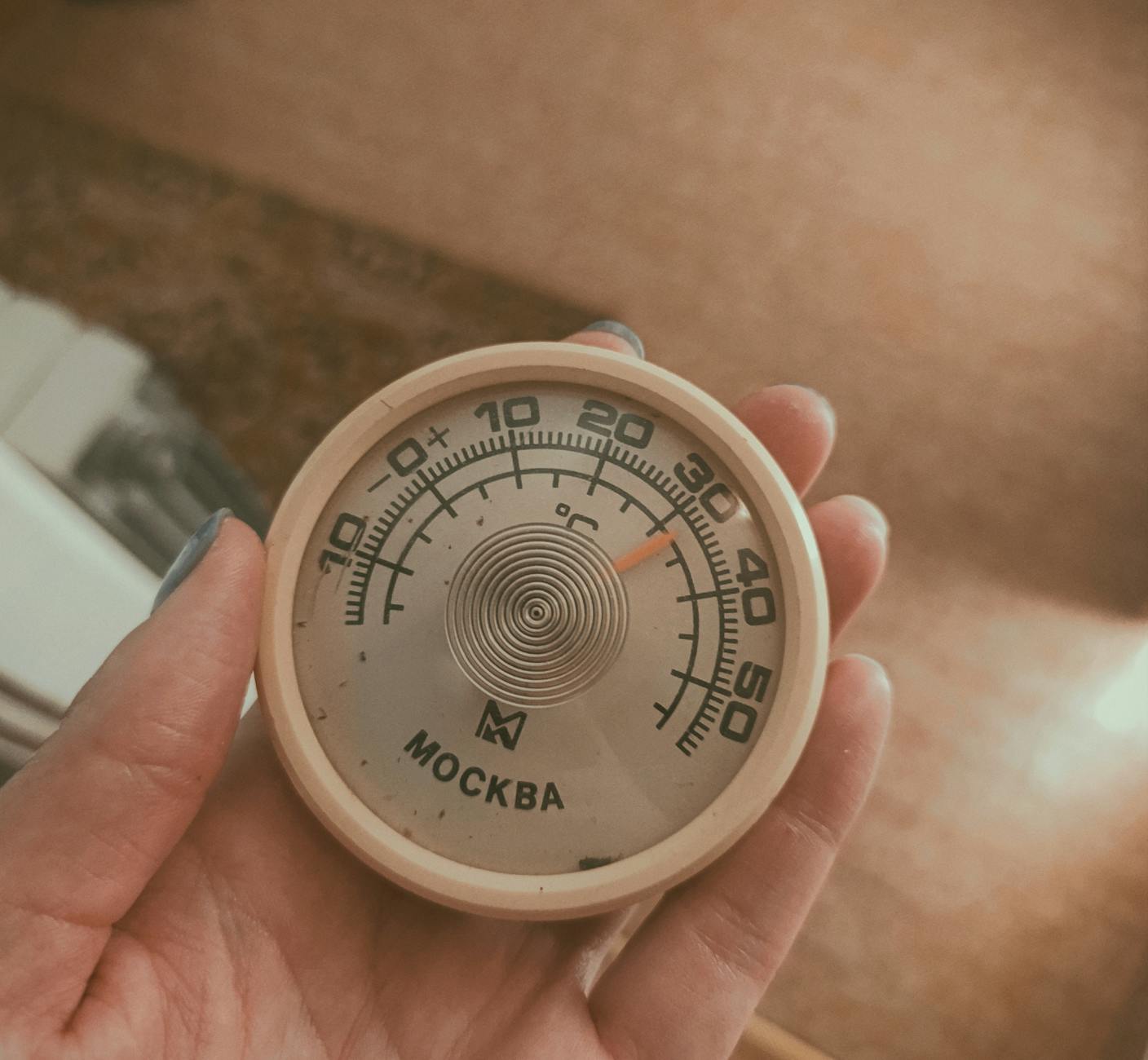
An infrared sauna can feel hotter than the displayed ambient temperature because the skin absorbs radiant energy directly, in addition to the convective heat from the surrounding air. The cabin thermometer reads air temperature; the skin experiences both the air temperature and the radiative load. The combined effect produces a perceived warmth above the displayed figure.
Direct skin absorption versus air temperature
The radiant heat load at the skin surface can add an effective 10-15°C of perceived warmth above the ambient figure. The effect parallels standing in winter sunshine, where outdoor air at 5°C feels warmer than 5°C on the side facing the sun because solar infrared is being absorbed directly. The phenomenon explains why some users find a 60°C infrared cabin as demanding as an 80°C traditional sauna: the lower air temperature is augmented by direct radiative absorption that the convective traditional cabin does not deliver at the same intensity.
Frequently asked questions
What is the typical temperature of an infrared sauna?
An infrared sauna typically operates between 45°C and 60°C. The lower end suits beginners; experienced users sit at the upper end. The setpoint is roughly half that of a traditional Finnish sauna (80-100°C) because infrared radiation heats the body directly through skin absorption rather than heating the surrounding air.
Why is an infrared sauna cooler than a regular sauna?
An infrared sauna uses radiant heat, infrared waves are absorbed directly by skin. A traditional Finnish sauna uses convective heat, hot air carries energy to the body. Radiant heat transfer is more efficient at the skin surface, so a lower ambient temperature produces a comparable physiological response.
What core body temperature does an infrared sauna produce?
Core body temperature typically rises to 38.0-38.5°C during a 30-45 minute session at 55-60°C ambient. The 38.5°C figure matches the threshold for heat-shock-protein induction reported in the sauna heat-stress literature (Patrick & Johnson, 2021). Core temperature is the physiologically relevant figure, not ambient cabin temperature.
How long should an infrared sauna session last?
A session should last 20 to 45 minutes. Beginners start at 20 minutes at 45-50°C and extend by approximately 5 minutes per week as heat tolerance develops. Sessions longer than 45 minutes do not produce additional documented benefit and increase dehydration risk. The recommended endpoint is the time at which a comfortable core temperature near 38.5°C is reached.
Can an infrared sauna get hotter than 60°C?
Manufacturer maximum setpoints typically reach 65-75°C, but operating above 60°C is uncommon. Skin discomfort and dehydration risk rise sharply above 60°C without a corresponding rise in physiological benefit. Higher ambient temperatures shorten tolerable session length, reducing total heat dose.
Does the infrared sauna heater type affect the temperature?
Yes, different heater technologies produce different operating-temperature profiles. Carbon-panel emitters operate at 45-55°C with lower surface heat. Ceramic emitters operate at 50-60°C with higher surface heat. Full-spectrum LED systems operate at 55-65°C and reach setpoint fastest. The differences relate to emitter wavelength distribution and panel surface temperature.
Why does an infrared sauna feel hot when the temperature reads 55°C?
The thermometer reads air temperature; the skin experiences a radiant heat load that adds an effective 10-15°C of perceived warmth. The effect parallels standing in winter sunshine where air at 5°C feels warmer than 5°C due to solar infrared. Direct absorption at the skin surface explains why 55°C infrared can feel as demanding as 80°C convective heat.
How long does an infrared sauna take to warm up?
A home infrared sauna reaches operating temperature in 10 to 15 minutes from cold. Carbon-panel cabins warm up fastest (8-12 minutes). Ceramic-emitter cabins take 12-18 minutes. Full-spectrum cabins reach 55°C in around 10 minutes. By comparison, traditional Finnish saunas take 30-45 minutes to reach 80°C.
References
- S001, Hussain J & Cohen M. Clinical Effects of Regular Dry Sauna Bathing: A Systematic Review. Evidence-Based Complementary and Alternative Medicine, 2018. DOI: 10.1155/2018/1857413.
- S007, International Commission on Non-Ionizing Radiation Protection (ICNIRP) 2013 guidelines on infrared radiation exposure.
- S012, Patrick RP & Johnson TL. Sauna use as a lifestyle practice to extend healthspan. Experimental Gerontology, 2021; 154: 111509.